Industry
Public Safety & Emergency Services
Client
SSS Public Safety
Redesigning emergency response through a unified digital platform
A mission critical public safety platform that improves how citizens and operators connect with emergency services, faster, clearer, and more reliably under pressure.
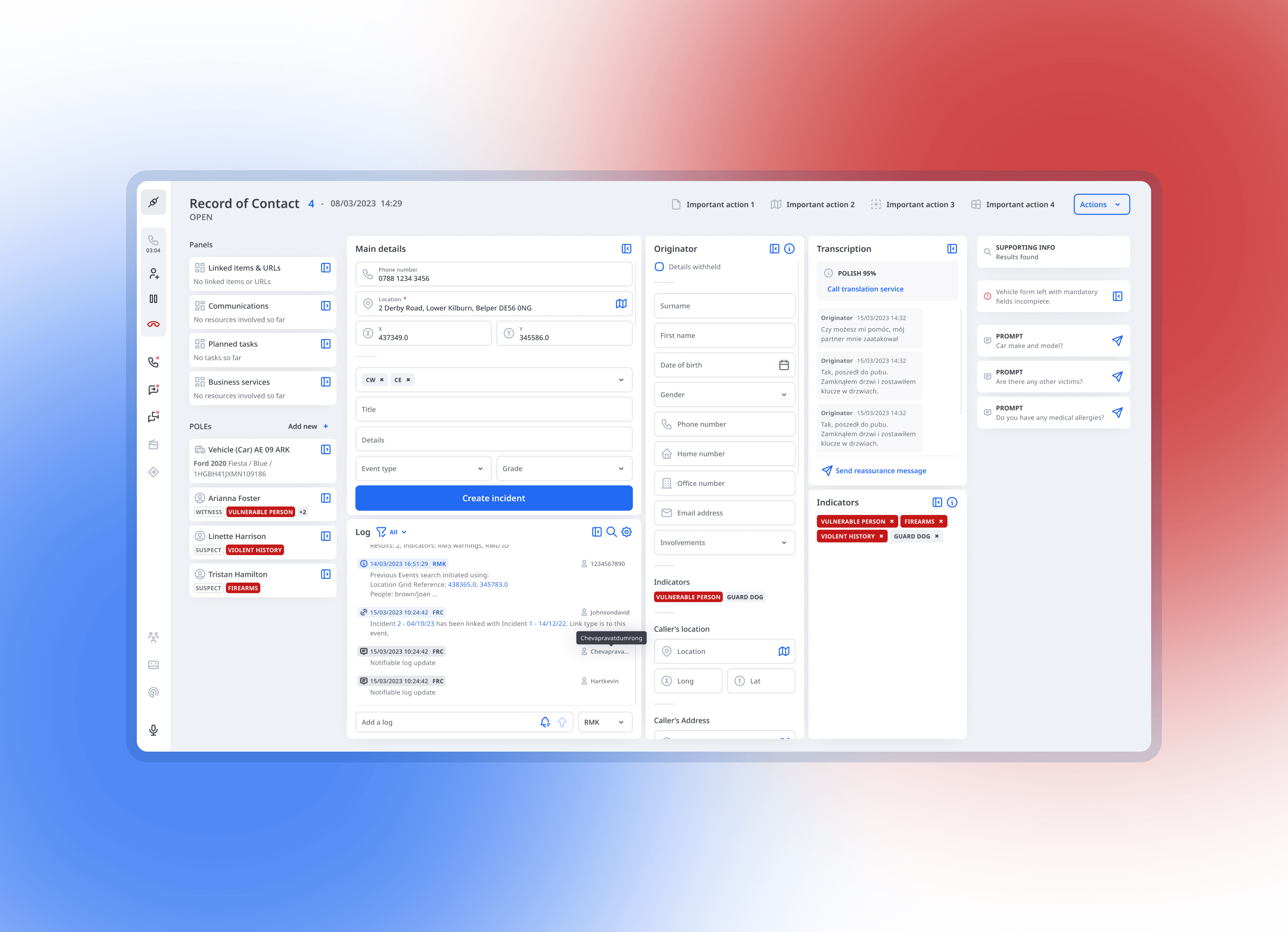
I worked for a public safety technology company to help redesign a mission-critical emergency platform used daily by call takers, dispatchers, and supervisors. The existing system struggled to support fast, high pressure decision making, creating friction in moments where every second matters. The goal was to rethink the experience end-to-end simplifying complex workflows, aligning multiple roles in a single platform, and ensuring clarity, speed, and reliability in life critical situations.
Role
Product Designer
Team
1x Project Manager
2x Business Analyst
2x Product Owners
3x Product Designers
8x Engeneers
Impact
Reduced friction in critical call handling and dispatch workflows
Enabled faster, clearer decision making in high pressure situations
Unified experiences across call takers, dispatchers, and supervisors
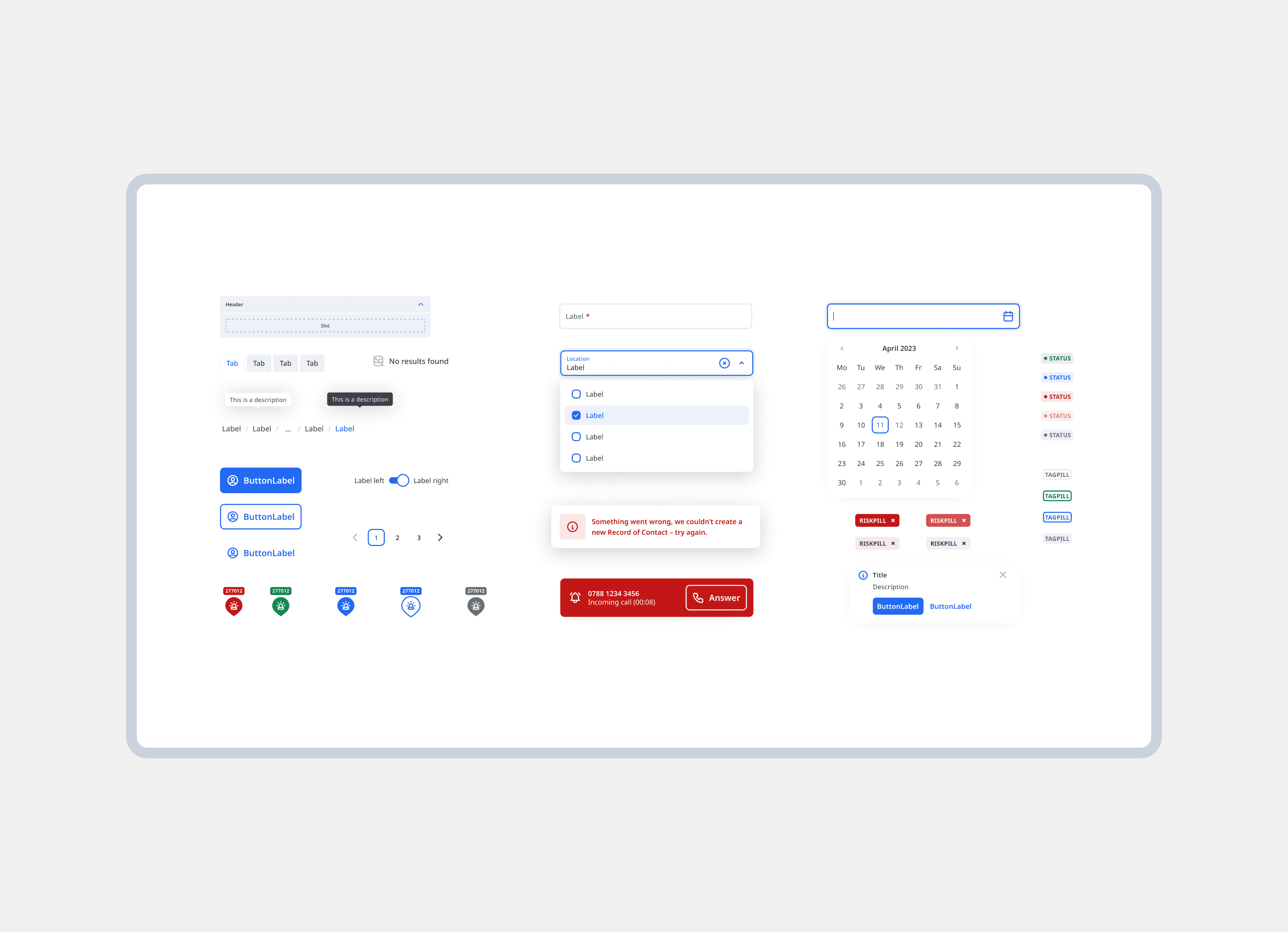
Established a scalable design system supporting future growth
Problem area
When system friction slows emergency response
Emergency services operate in high pressure environments where speed, clarity, and coordination are critical. However, the existing platform introduced friction through fragmented workflows, inconsistent interfaces, and role-specific silos.
Instead of supporting operators, the system increased cognitive load at the worst possible moments, when every second can make the difference between life and death.
Problem 1
Critical information was difficult to scan and actions required multiple steps, slowing down call takers during time sensitive situations.
Problem 2
Context was often lost between call takers, dispatchers, and supervisors, leading to delays and misalignment during resolution.
Problem 3
Unclear interfaces and fragmented tools increased operator stress and the risk of errors in critical scenarios.
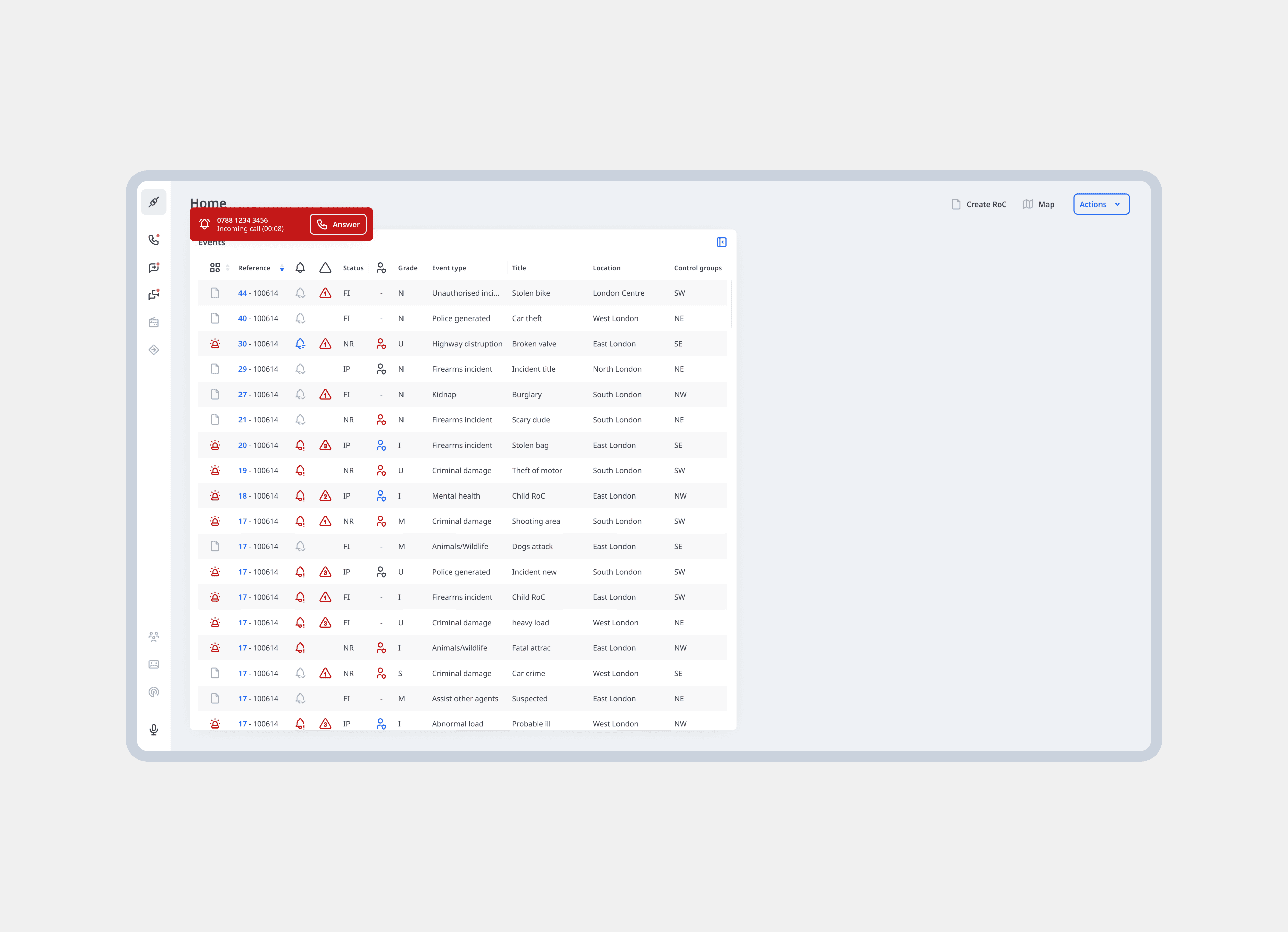
Product before redesign
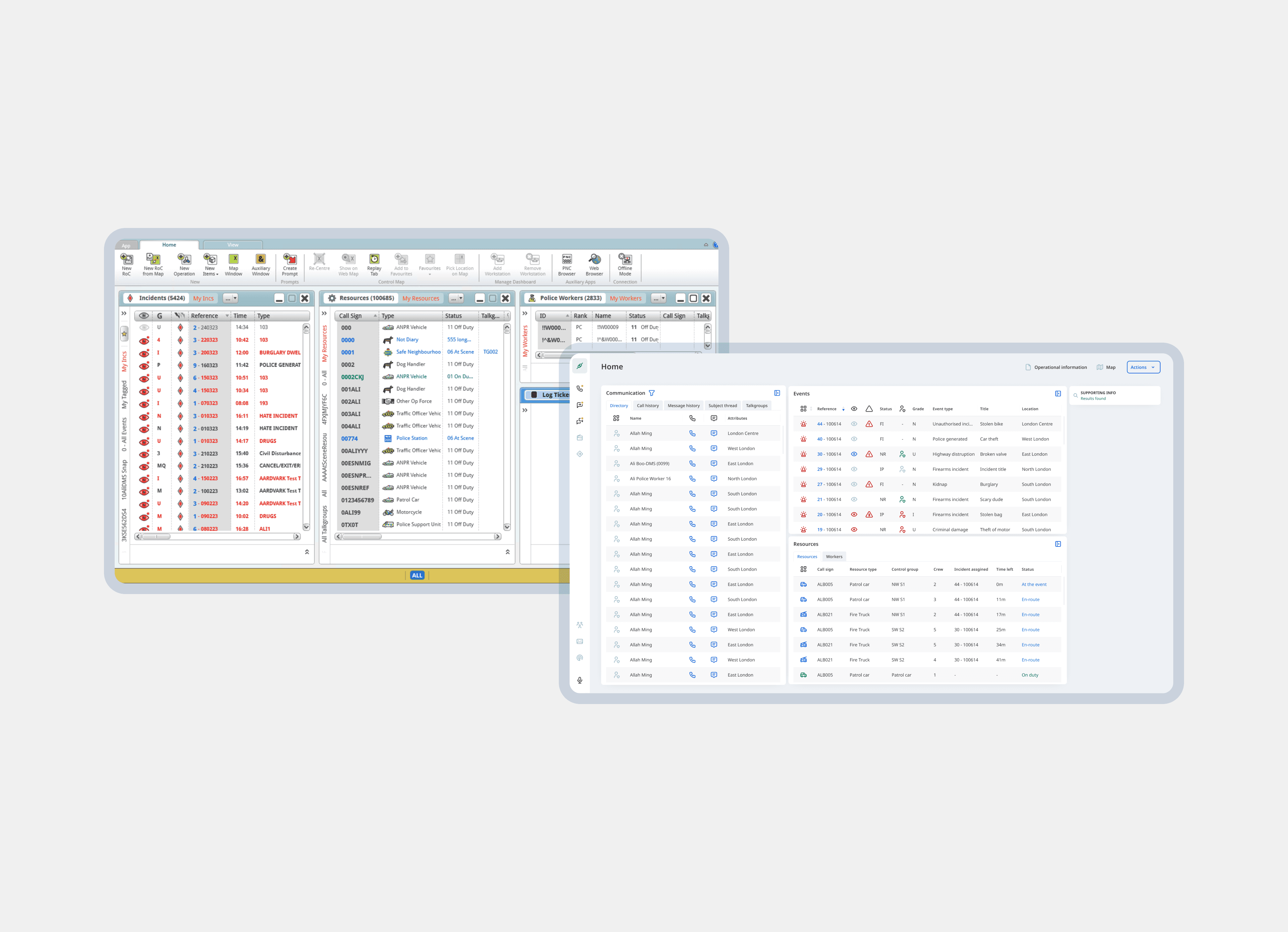
Oportunity 1
The interface surfaced too much information at once, making it difficult for call takers and dispatchers to quickly identify what required immediate action.
Oportunity 2
Separating incidents, resources, and workers across panels slowed coordination and increased the risk of missed or delayed responses.
Design goals
What I aimed to achieve
Reduce response time
Design workflows and layouts that minimize cognitive load, surface critical information instantly, and support rapid decision making when every second counts.
Support multiple roles
Create a flexible system that adapts to different responsibilities while maintaining consistency, clarity, and shared situational awareness across teams.
Trust in critical moments
Ensure the interface feels predictable, stable, and easy to understand, so users can focus on saving lives, not on figuring out the tool.
Design decision 1
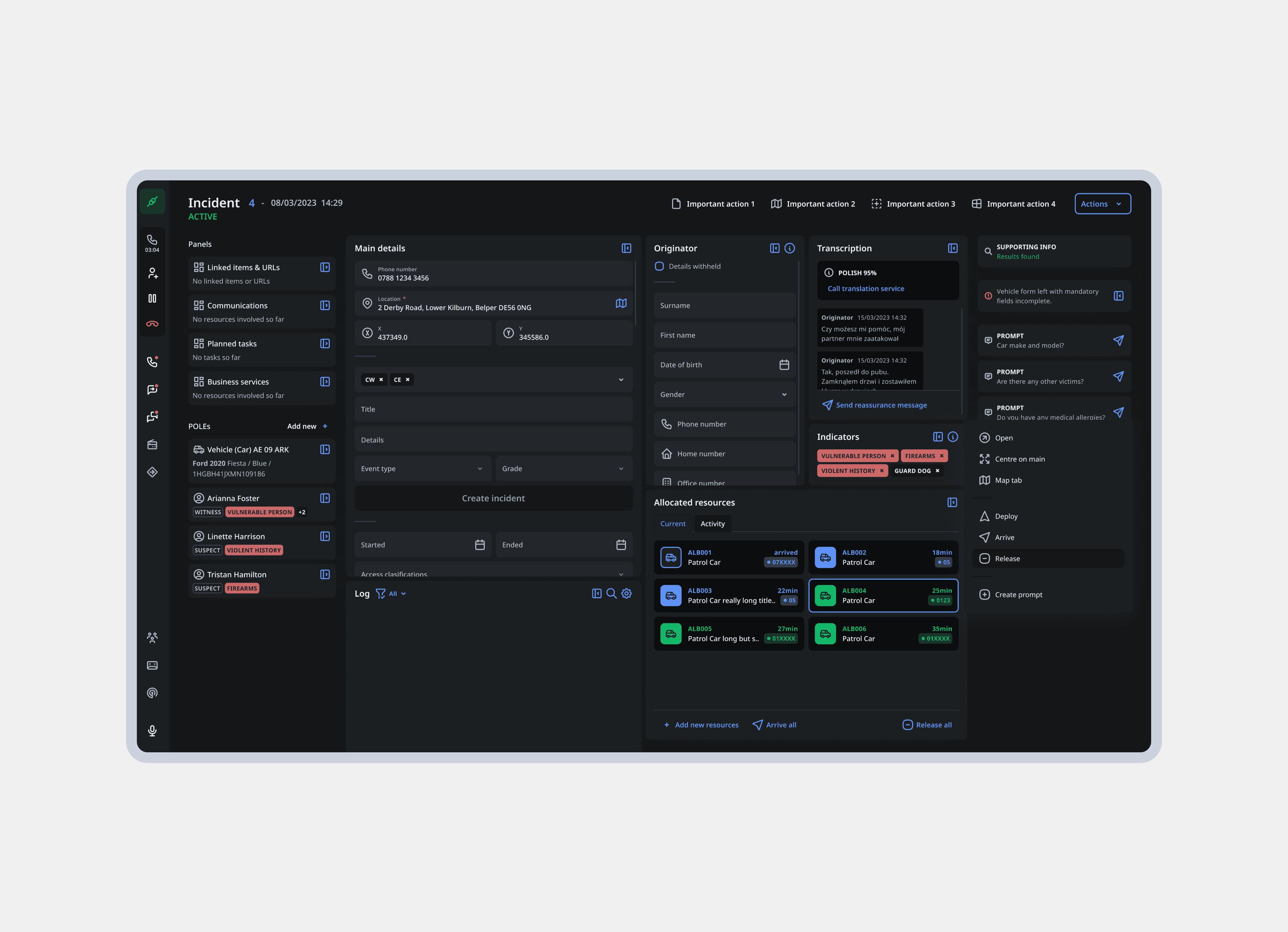
Making complex event relationships understandable
Operators needed to quickly understand how incidents, people, locations, and vehicles were connected often across time. Instead of navigating fragmented records or long lists, I focused on surfacing meaningful relationships between events to support faster sense-making, better situational awareness, and more confident decisions under pressure.
This meant prioritising clarity over completeness, offering multiple ways to explore the same data, and ensuring users could move seamlessly between overview and detail without losing context.
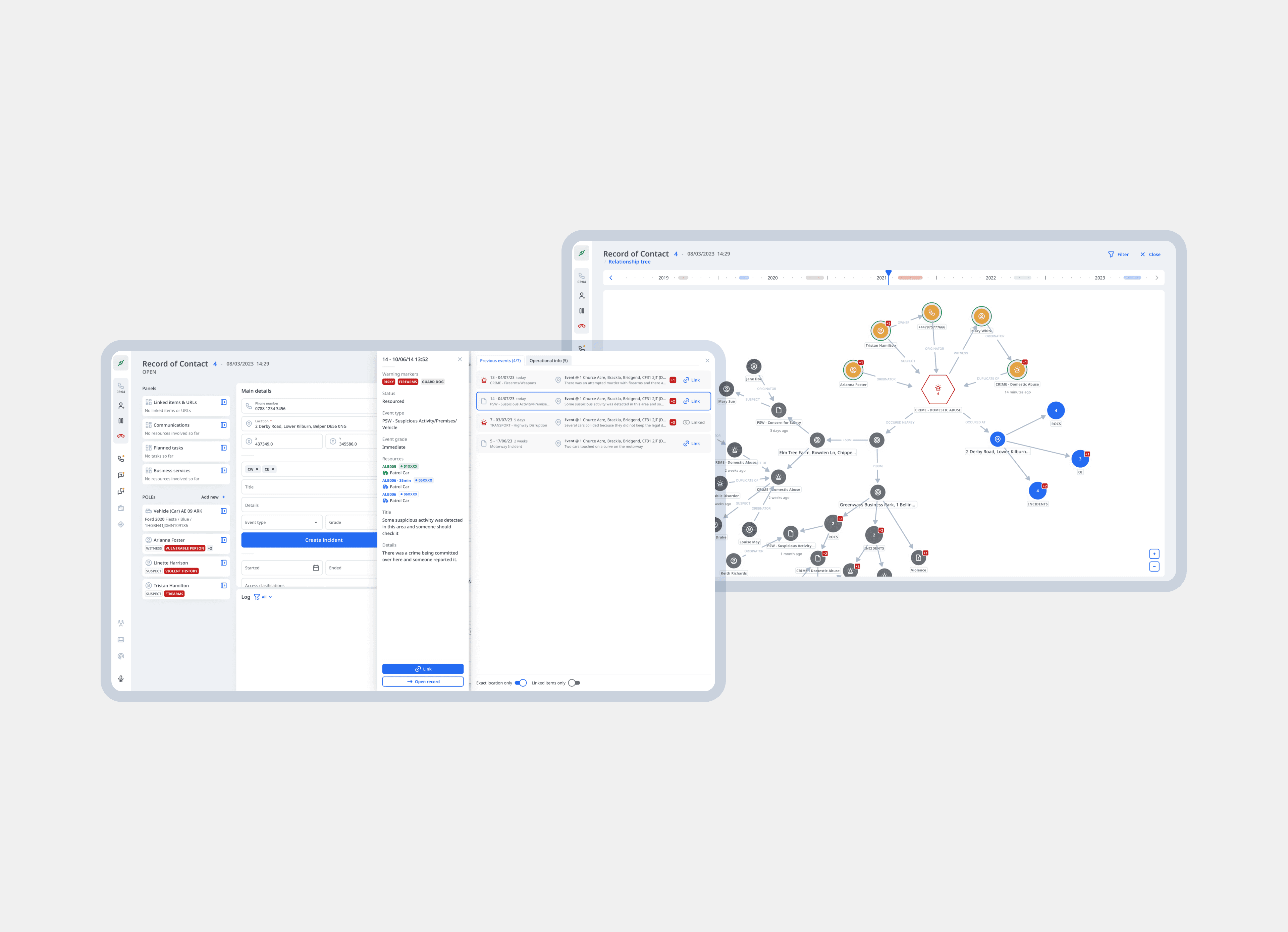
Key relationship insights surfaced
Event timelines
See how incidents unfold over time and spot patterns or escalation quickly.
People & roles
Reveal connections between suspects, victims, witnesses, and past events.
Locations & assets
Link addresses, vehicles, and objects across incidents for faster validation.
Visual vs list views
Switch between visual maps and structured lists based on task and urgency.
Design decision 2
Building trust through event history and traceability
In emergency contexts, users must trust the system instantly. Early discovery showed that call takers, dispatchers, and supervisors needed confidence that information was accurate, up to date, and auditable. A lack of transparency around how incidents evolved over time increased hesitation and cognitive load in high-pressure situations.
To address this, I designed a clear event history model that captures every update as it happens, making the system predictable, explainable, and safe to use when seconds matter.
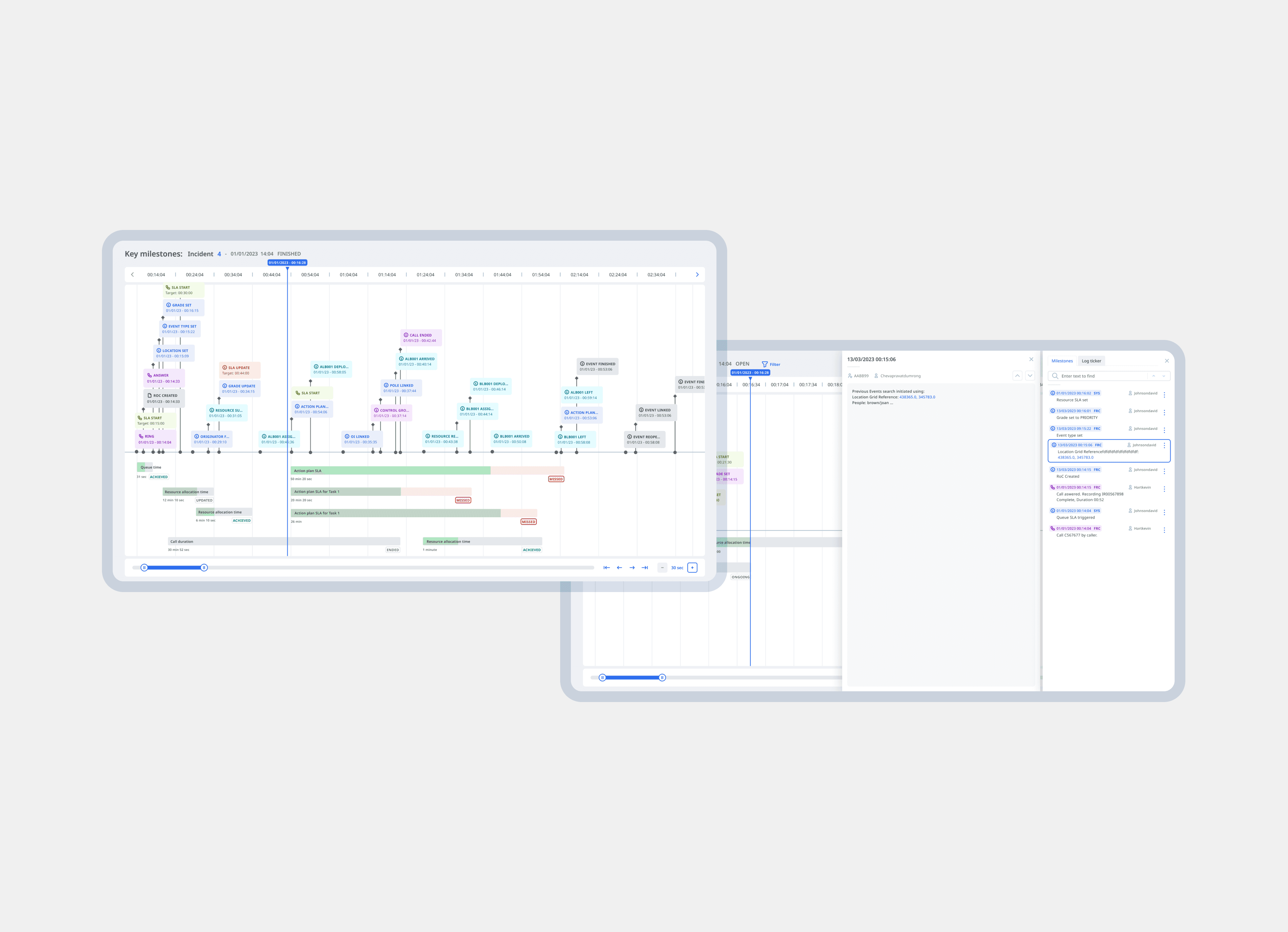
Unified event timeline
Shows how each incident evolves over time, giving users immediate situational context.
Role-based updates
Clearly attributes changes to call takers, dispatchers, or supervisors for accountability.
Structured change tracking
Highlights critical updates like location, witnesses, vehicles, or status changes.
Design decision 3
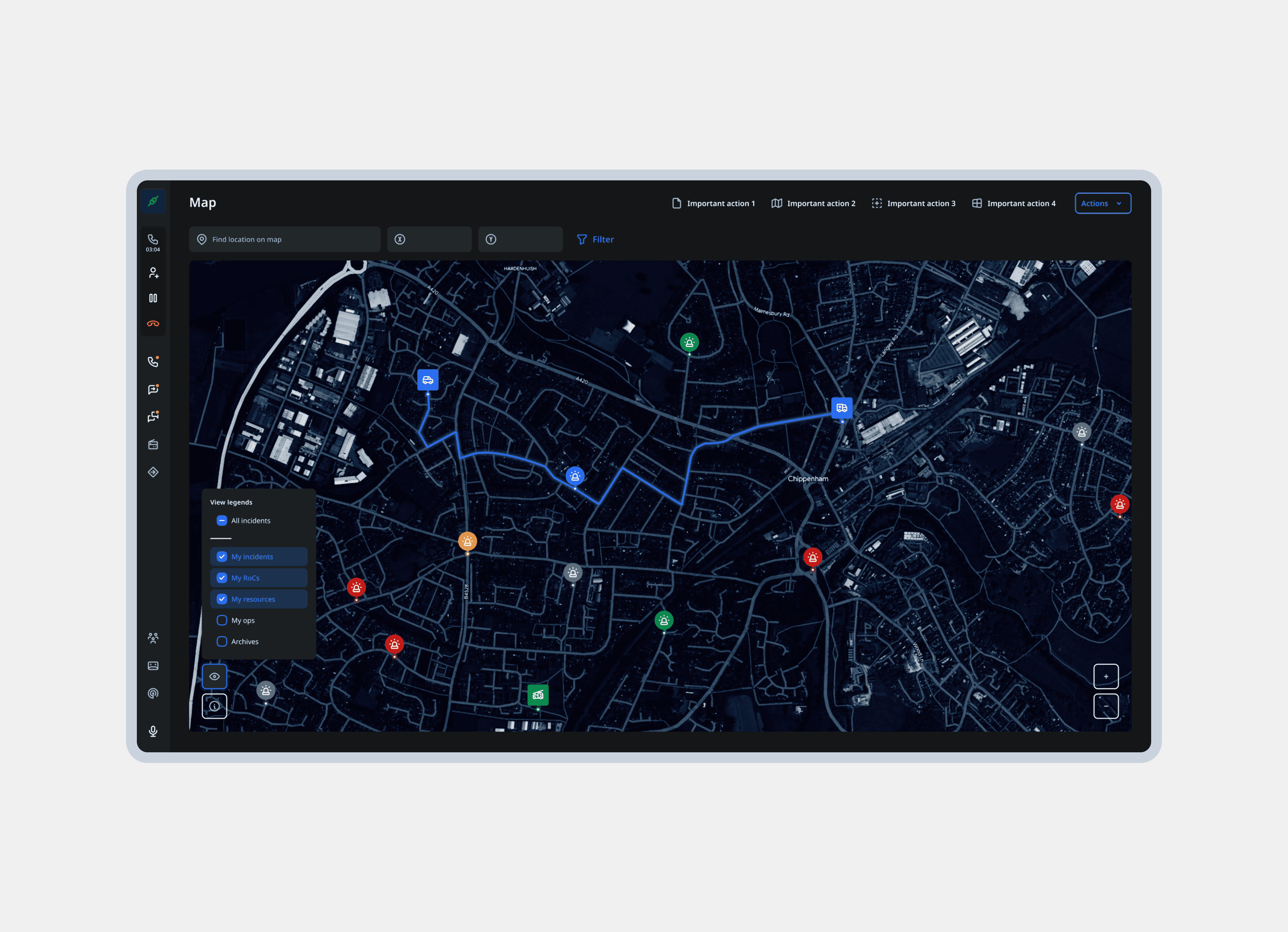
Choosing clarity over density in real-time operations
I deliberately chose a clarity first approach for the live map experience instead of preserving a data dense operational layout. In emergency scenarios, users don’t need to see everything at once, they need to understand the situation instantly and act without hesitation.
The decision was driven by the reality of the context: dispatchers operate under time pressure, cognitive load is high, and every visual element competes for attention.
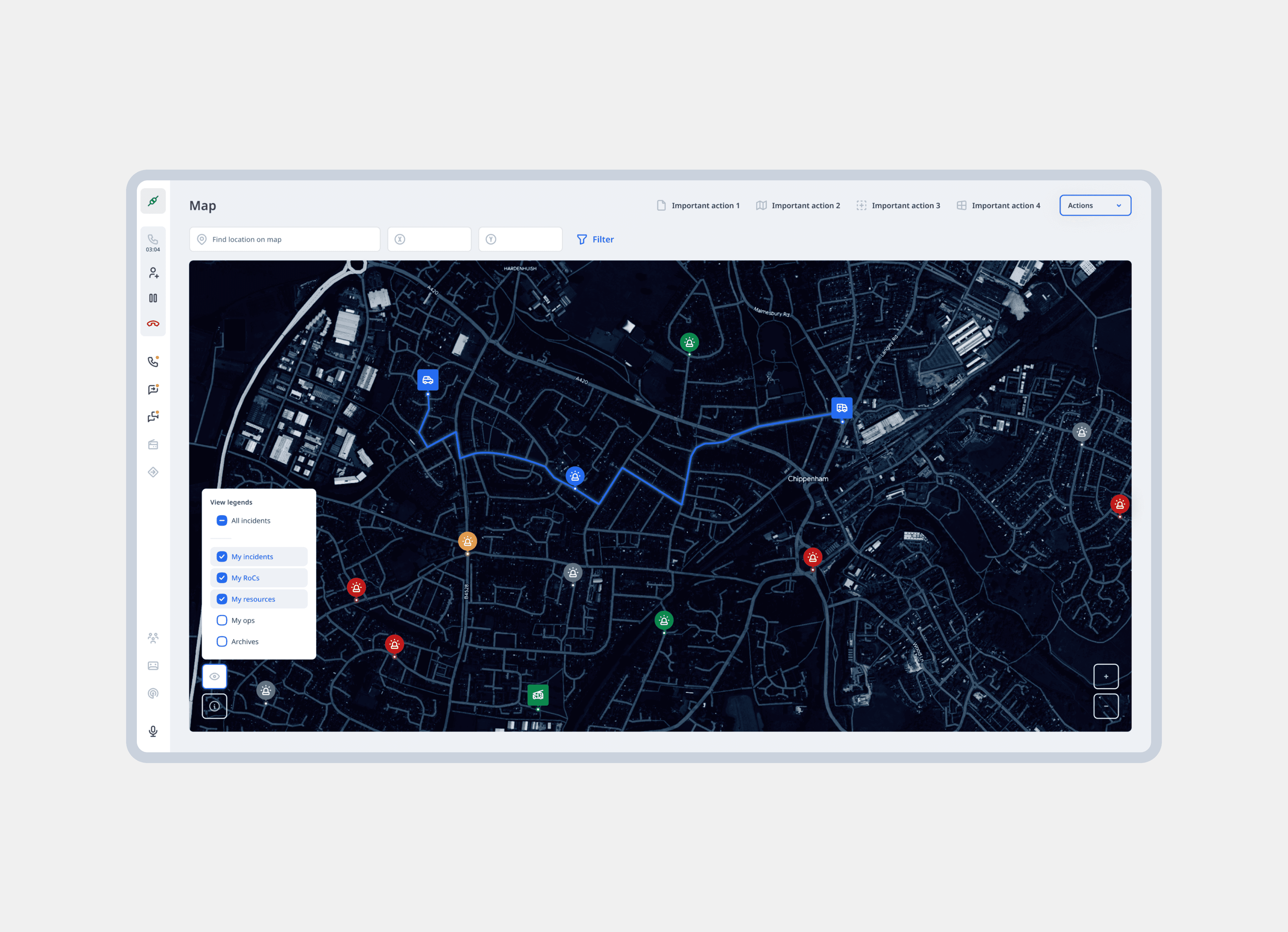
Priority first map view
Helps dispatchers instantly see what requires attention, reducing cognitive load in high pressure situations.
Real time context
Keeps incidents, resources, and status changes clearly visible, enabling confident decisions as situations evolve.
3. Focused interface layout
Removes unnecessary visual noise so teams can allocate resources faster without being slowed by complexity.
Retrospective
Designing for confidence under pressure
This project reinforced a core principle of emergency design: users don’t need more data, they need clear, trustworthy signals. In high pressure moments, confidence comes from instantly knowing what matters and acting without hesitation.
By reducing visual noise and prioritising real time clarity, the platform shifted from a complex operational tool to a reliable decision support system. Dispatchers could assess situations faster, allocate resources with confidence, and adapt as incidents evolved.
This foundation now enables the next phase: strengthening real time communication between call takers, dispatchers, and field units, while preserving speed, usability, and trust.
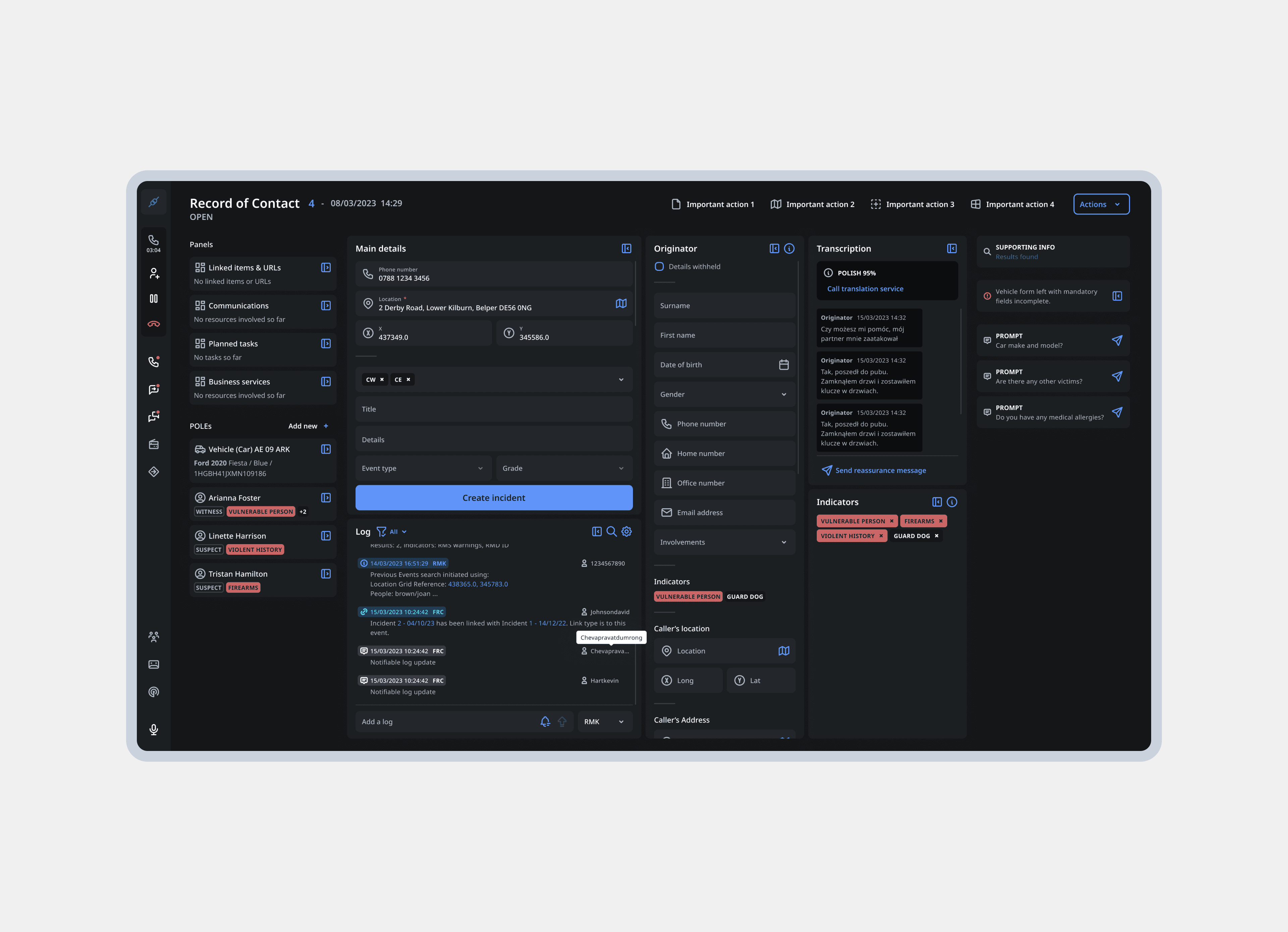
Impact
Faster, more confident decisions
Dispatchers gained immediate situational awareness, allowing them to identify critical incidents at a glance and without hesitation.
Improved operational coordination
Clear visibility of incidents and resources enabled smoother collaboration between call takers, dispatchers, and field units.
Reduced cognitive load under pressure
A focused, uncluttered interface helped teams stay effective in high-stress scenarios, where seconds matter.