Industry
Retail & Lifestyle / Tourism & Experience Platforms
Client
Mall of Dubai
Unified Commerce & Experience Platform
Visitors arriving in Dubai were faced with an overwhelming number of shopping, dining, leisure, and entertainment options, often spread across disconnected platforms. Planning visits, discovering relevant experiences, or finding the right places to go required time, research, and local knowledge.
This friction made it harder for users to confidently explore the city and fully enjoy what Dubai has to offer.
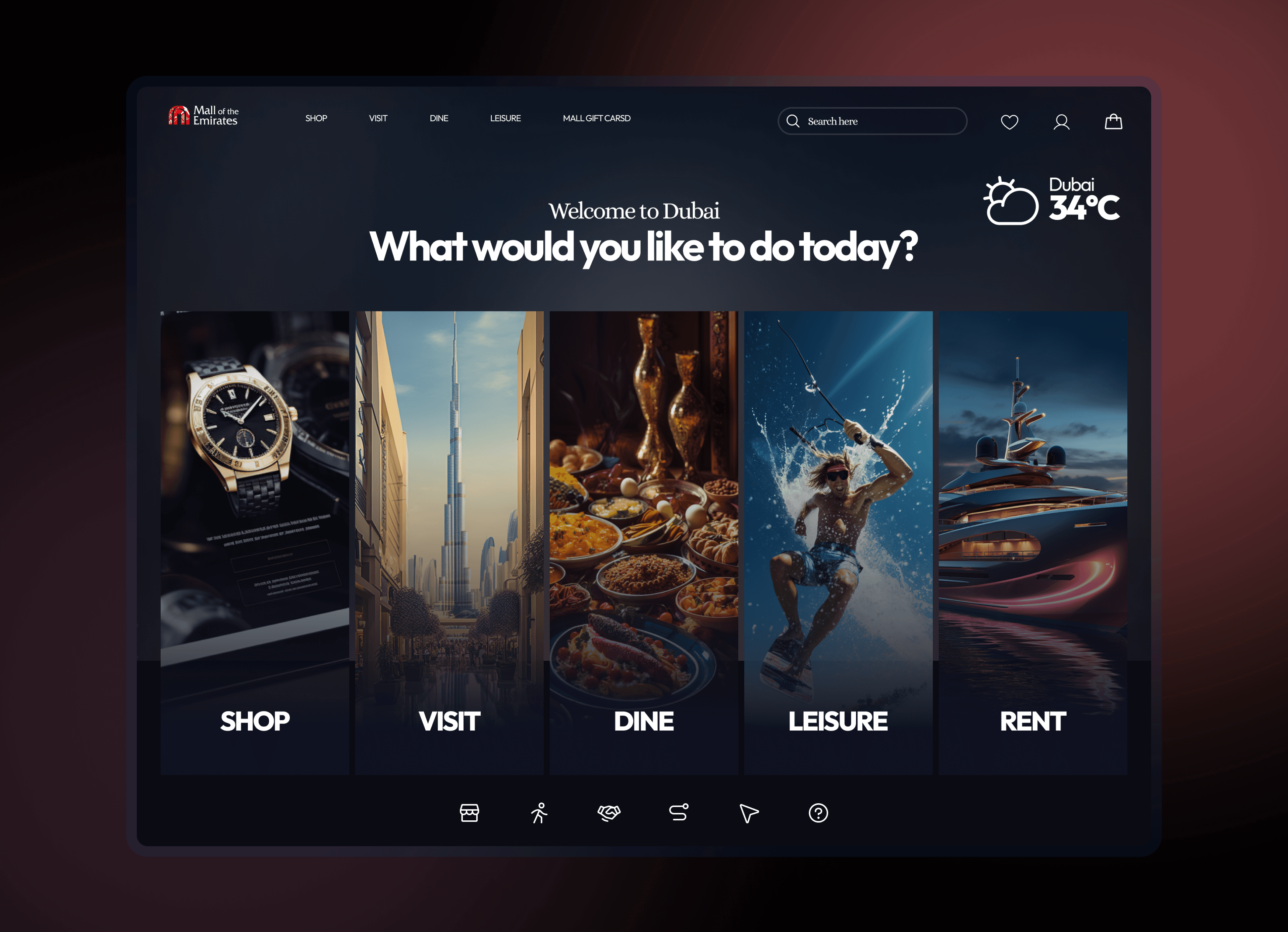
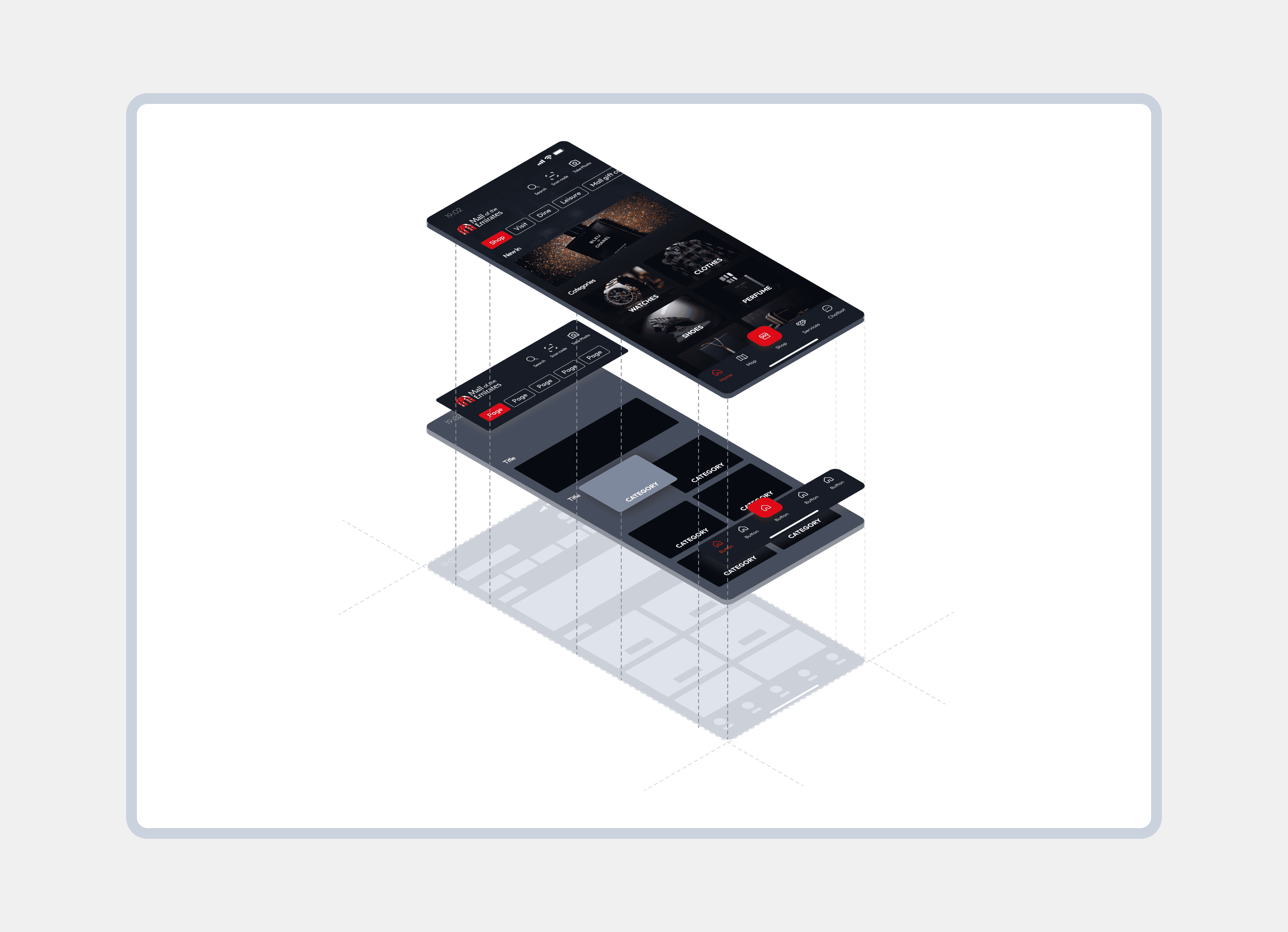
Instead of treating shopping, dining, leisure, and visit planning as separate experiences, I designed a single, cohesive platform that brings everything together in one intuitive flow.
Rather than focusing on individual screens, I mapped end-to-end user journeys, from discovery to planning to on-site experience, to understand where users felt lost, overwhelmed, or unsure of their next step.
Role
Product Designer
Impact
Designed a unified, multi-brand platform spanning desktop, tablet, and mobile
Simplified discovery and planning for users unfamiliar with Dubai’s experiences
Enabled seamless exploration across shopping, dining, leisure, and city visits
Integrated innovative touchpoints including VR shopping, AI chatbot, and smart mirrors
Delivered a cohesive, scalable concept supporting future expansion and loyalty features
Problem area
When discovery friction blocked engagement
Users arriving in Dubai were faced with a fragmented ecosystem of shopping, dining, leisure, and city experiences. Without a clear, guided way to explore what the city offers, they struggled to understand where to go, what to do, and how to plan their time, leading to confusion, low engagement, and missed opportunities to experience the city fully.
Problem 1
New visitors were exposed to too many disconnected experiences, making it difficult to decide where to start or how to plan their visit efficiently.
Problem 2
Shopping, dining, leisure, and city activities lived in separate platforms, forcing users to jump between tools and breaking the overall experience.
Problem 3
Lack of contextual and personalized guidance reduced user confidence, making visitors hesitant to explore and plan their experience.
Design goals
What I aimed to achieve
Unified discovery across touchpoints
Design a single multi-brand platform that brings together shopping, dining, leisure, and city experiences into one coherent journey across desktop, tablet, and mobile.
Enhance exploration through Virtual Reality, AI-driven chat assistance, and in-store Smart Mirrors, helping users understand options, compare experiences, and make confident choices.
Consistent experience, physical and digital
Create a seamless experience that connects online planning with in-store interactions and city exploration, reinforced by a shared loyalty program and consistent design language.
Design decision 1
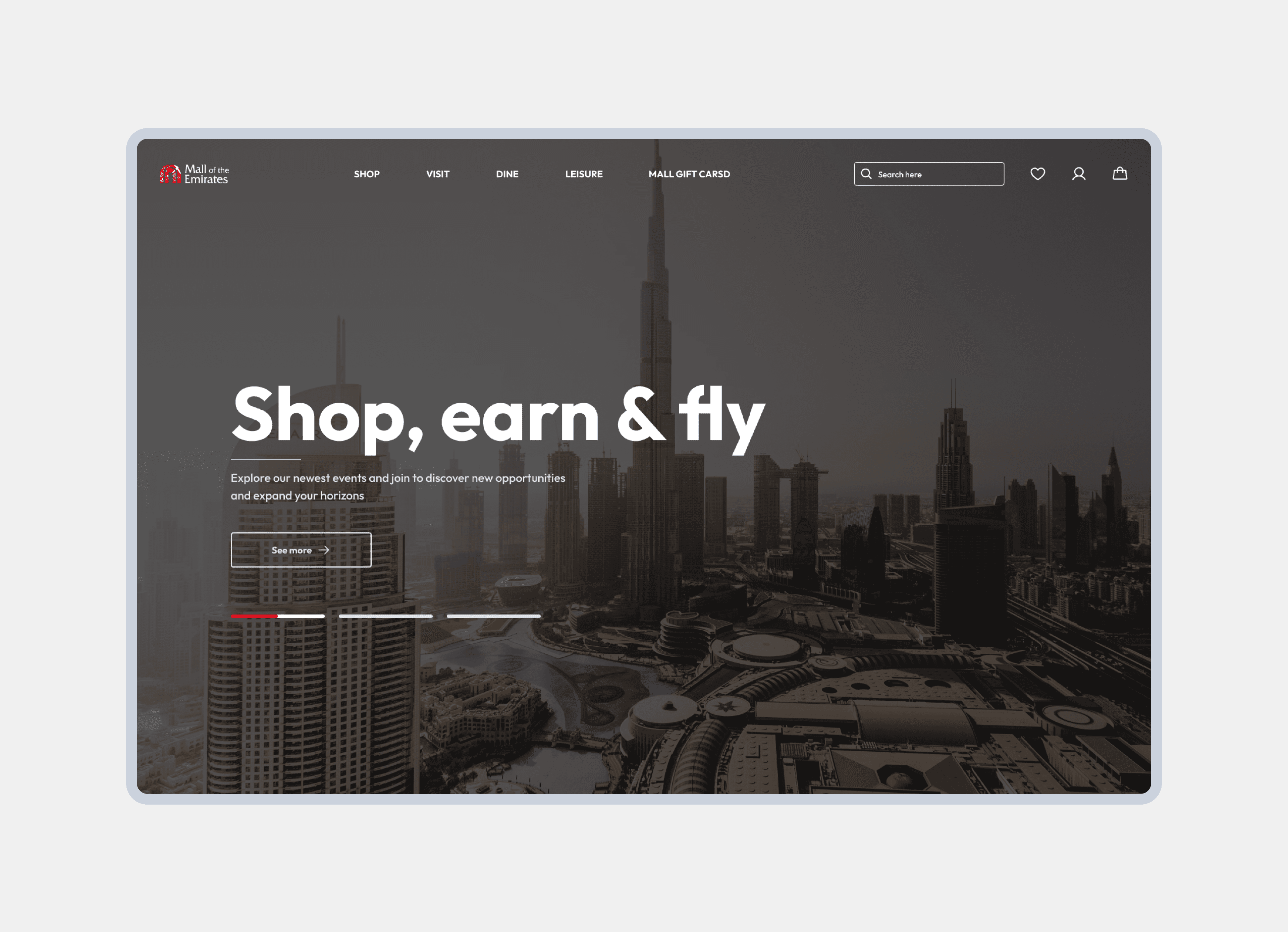
Customising the website to adapt to different brand needs
Different brands needed to tell their stories in different ways, but the existing setup forced everyone into the same rigid layout. This limited expression, reduced engagement, and made it harder for businesses to stand out.
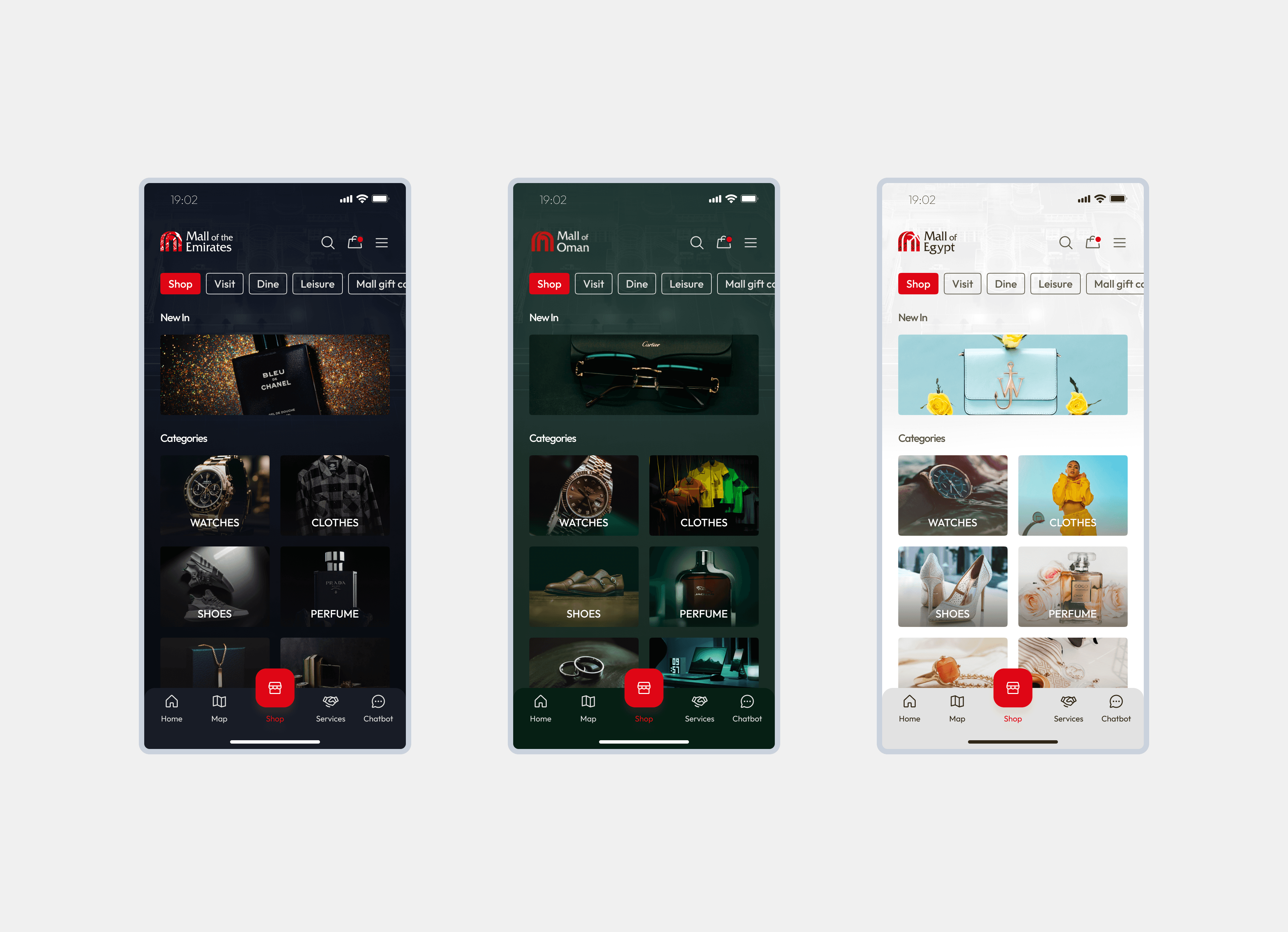
I designed a flexible website customisation system that allows brands to adapt their online presence without breaking consistency. By introducing modular sections, configurable banners, and support for rich media like video, businesses could tailor their pages while still working within a coherent design framework.
This approach balanced freedom and structure, empowering brands to personalise their experience while ensuring visitors encountered a clear, engaging, and familiar interface across the platform.
Design decision 2
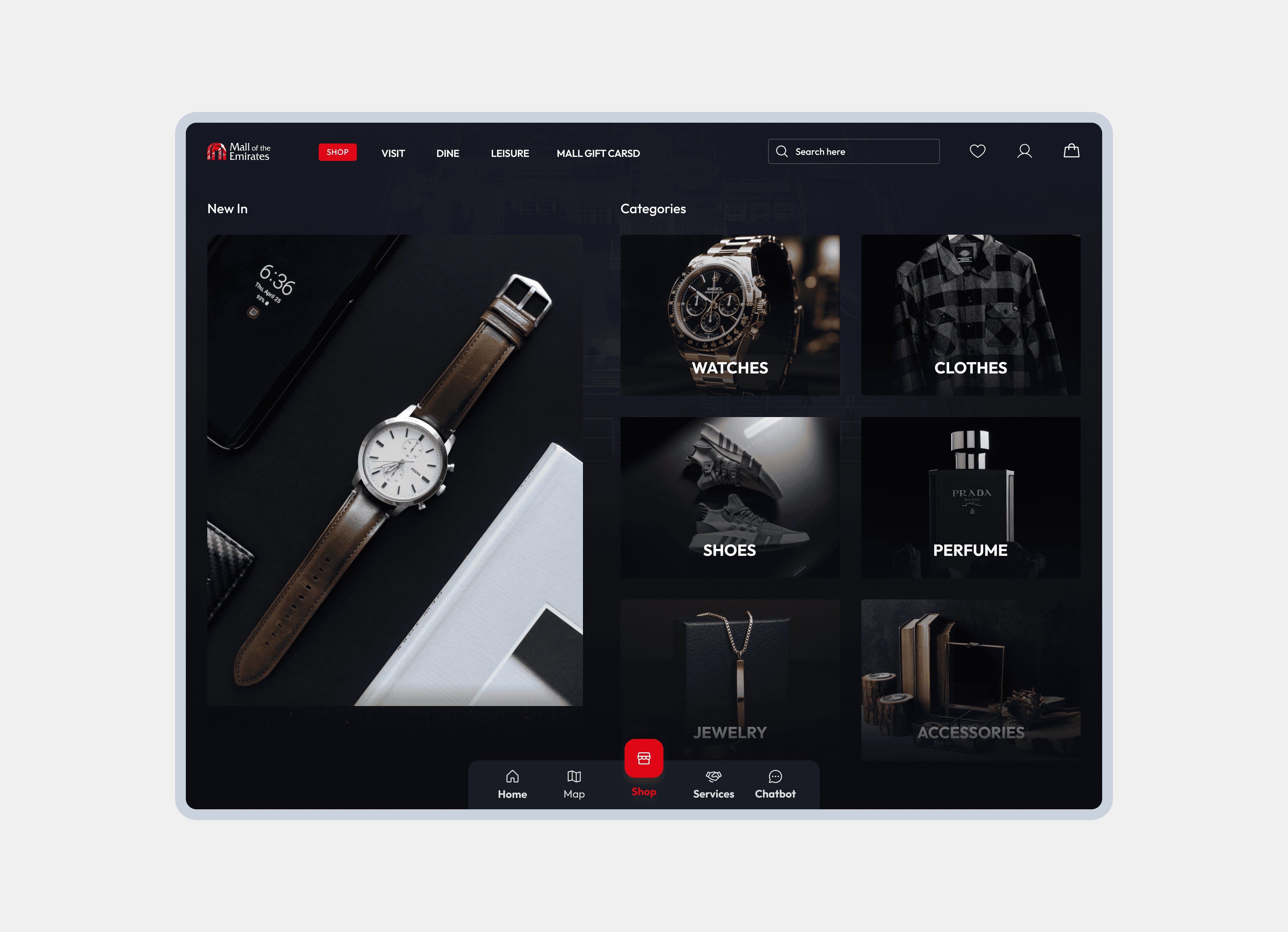
Extending the platform into hotels to reach users earlier
Many visitors arrived in Dubai without a clear plan and only discovered shopping, dining, and experiences once they were already on-site. This limited exploration, reduced engagement, and missed opportunities to connect users with relevant offerings at the right moment.
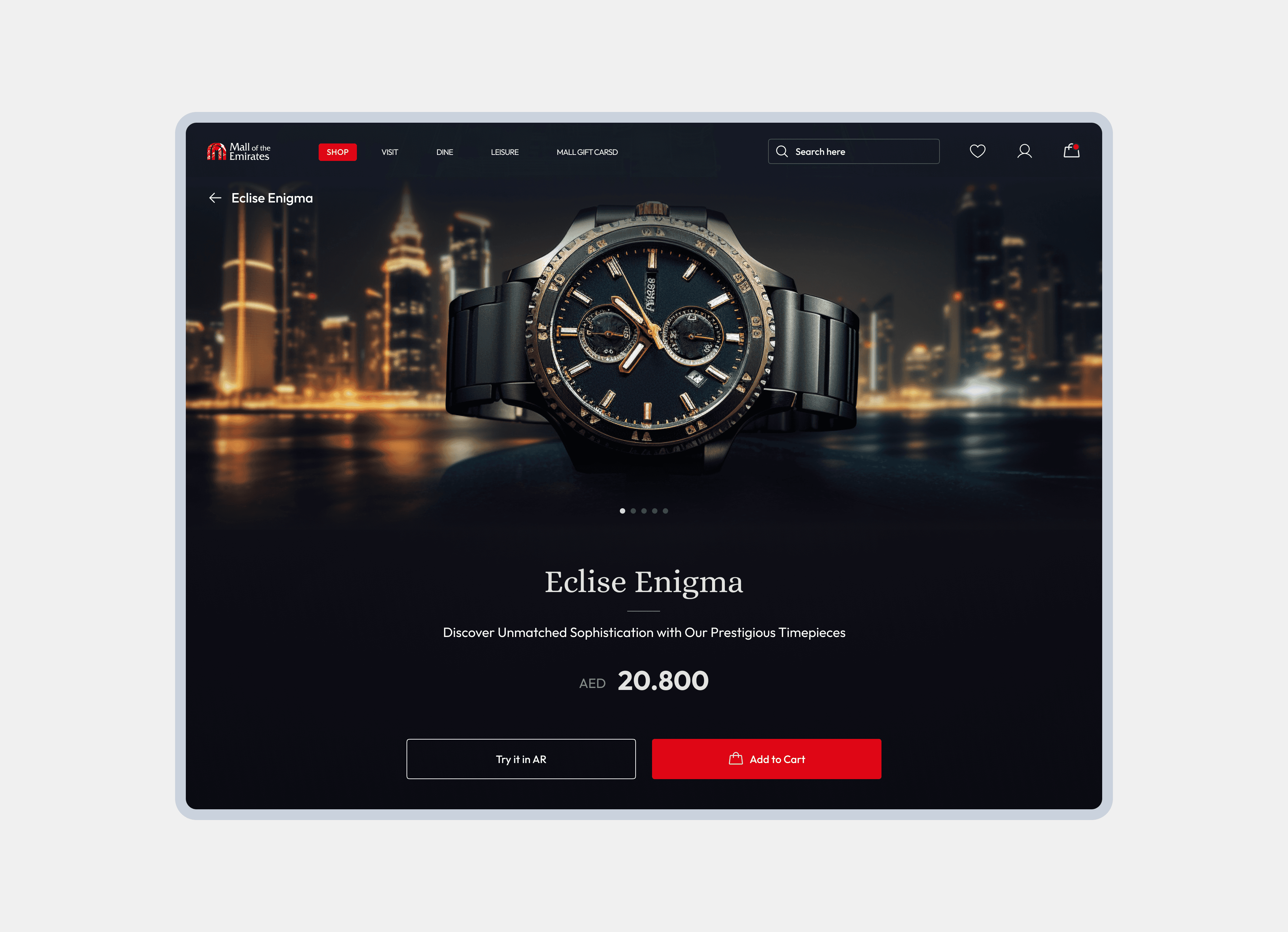
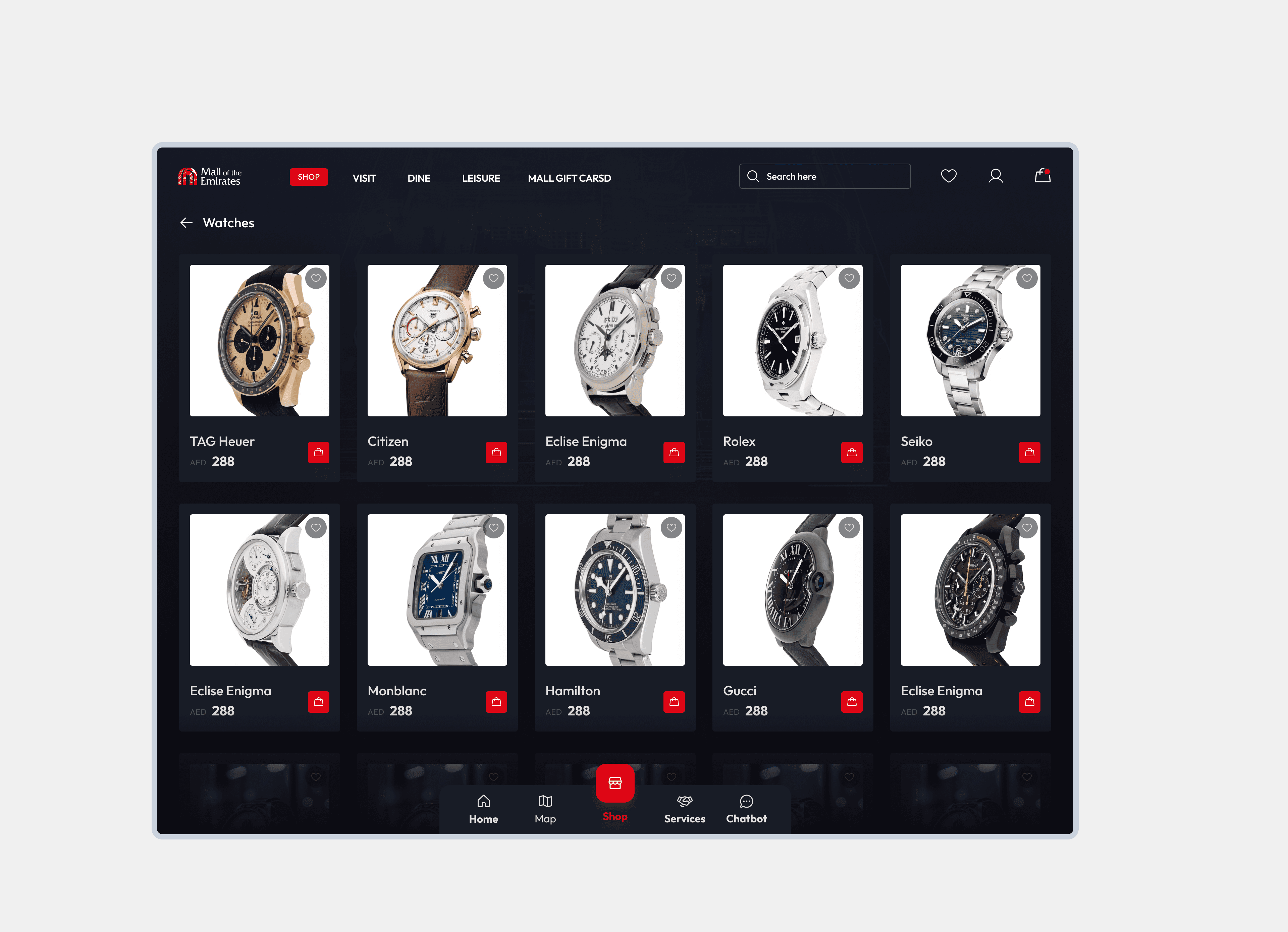
To address this, I designed a tablet-based experience for hotels, placing the platform directly where visitors stay. These tablets allowed guests to browse shopping options, reserve experiences, and book dining tables in one place, without needing to download an app or navigate multiple services.
By meeting users earlier in their journey and embedding the platform into their physical environment, the experience became more accessible, contextual, and seamless, helping visitors explore Dubai confidently while increasing engagement across the ecosystem.
Design decision 3
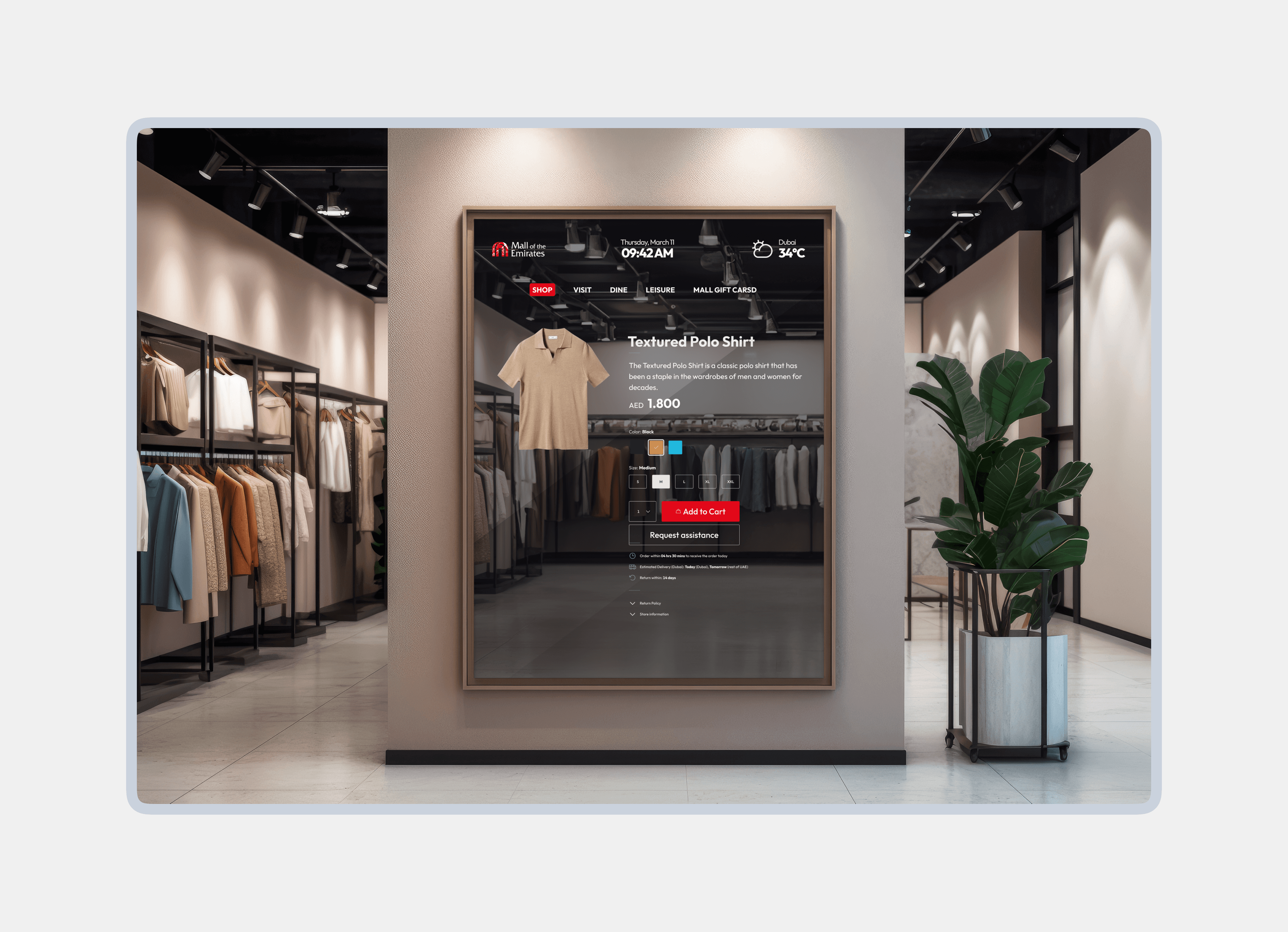
Making shopping immersive to increase engagement and loyalty
Traditional online shopping felt flat and transactional, especially for visitors unfamiliar with local brands or products. Users lacked confidence when browsing, struggled to visualise products, and had little motivation to return after a single purchase.
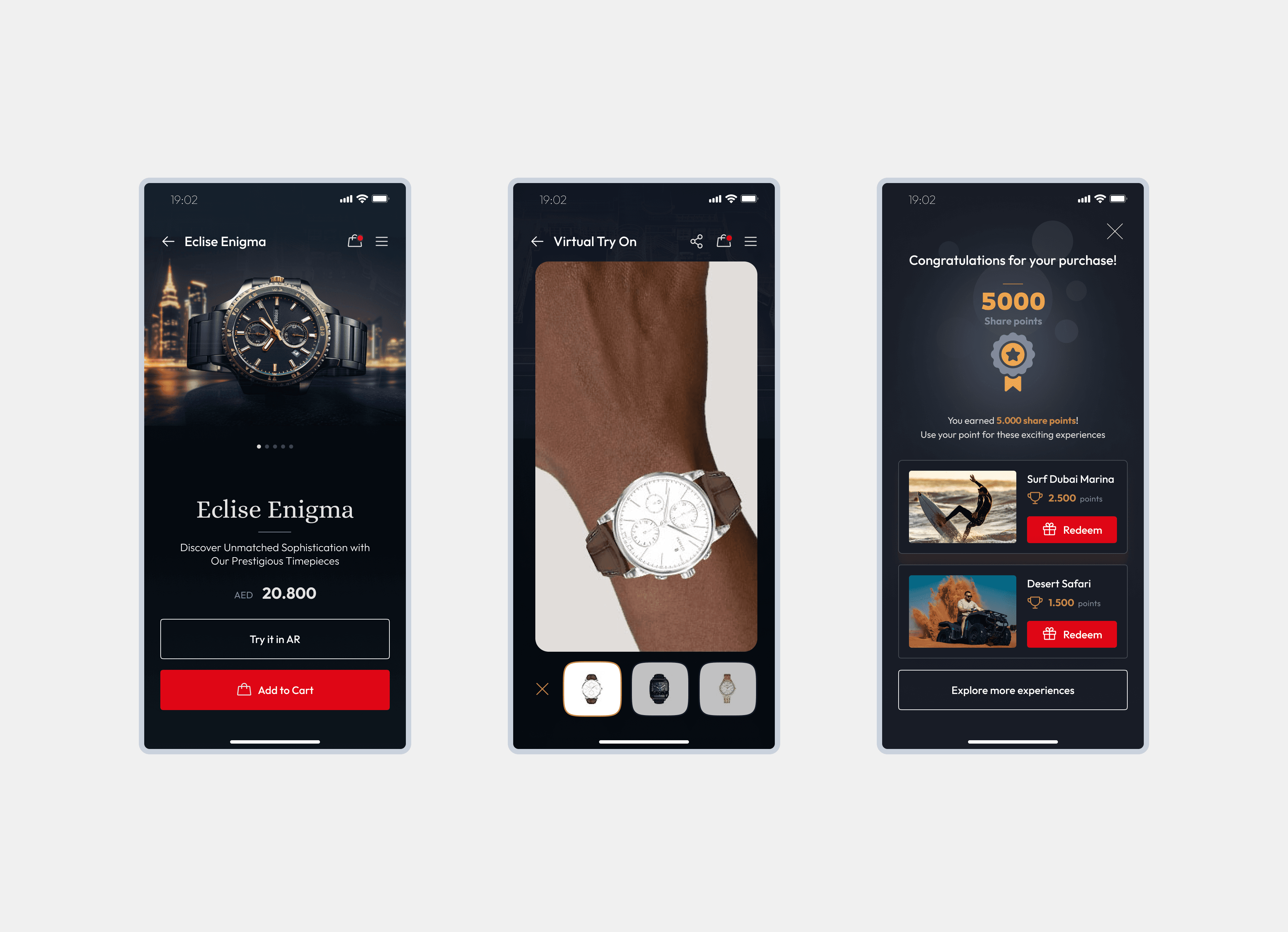
To address this, I designed an immersive shopping experience that blends a personalised mobile app with Virtual Reality and in-store Smart Mirrors. Users could explore products in context, such as trying on watches virtually, before committing to a purchase. The experience extended beyond buying, rewarding users with loyalty points that could be redeemed across shopping, dining, and leisure activities.
By combining immersive exploration with a rewards driven ecosystem, the platform transformed shopping from a one off task into an engaging, confidence building experience that encouraged repeat visits and long-term engagement.
Design decision 4
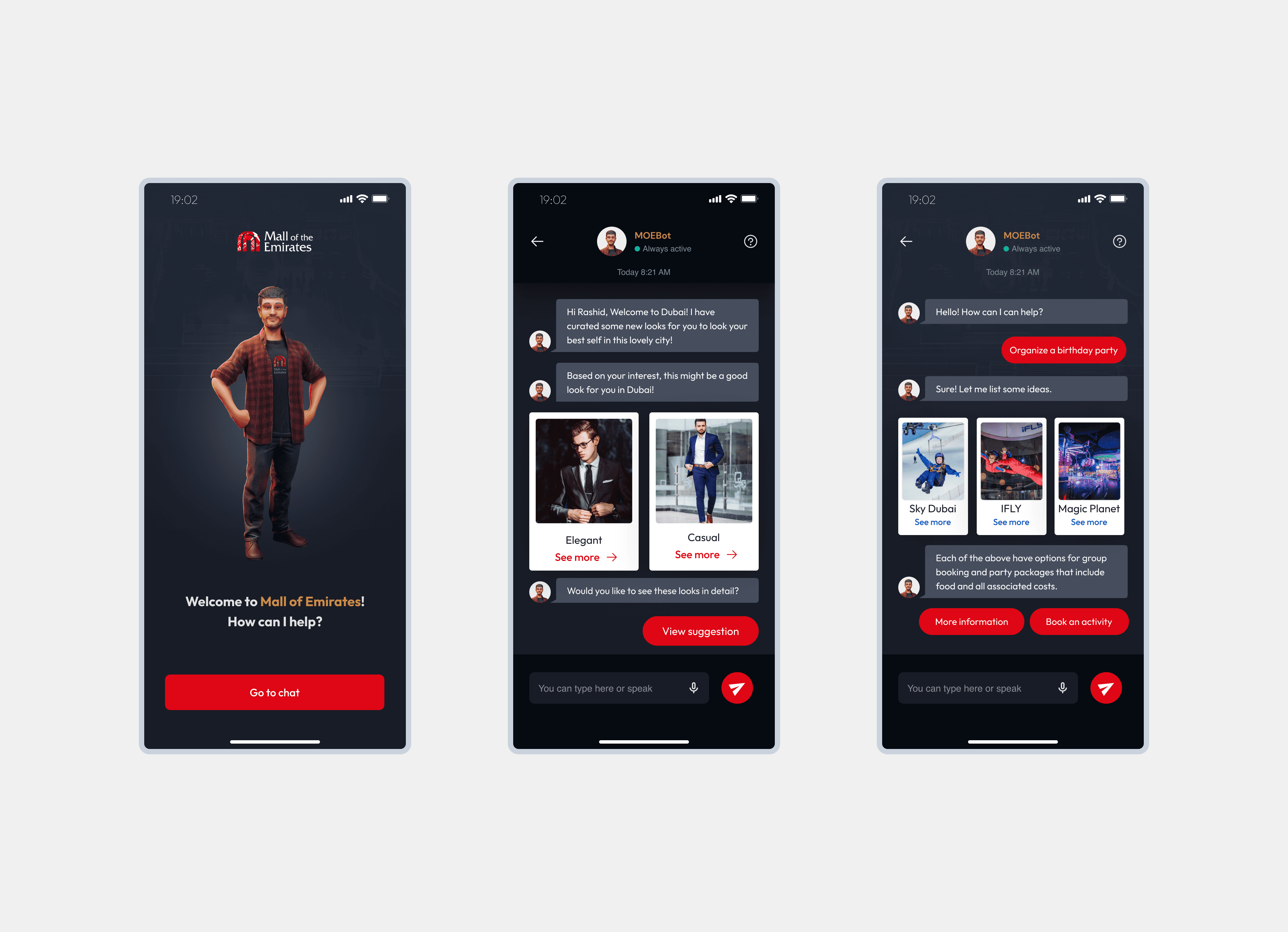
Using an AI chatbot to reduce uncertainty and guide exploration
New and returning users often felt unsure where to start or how to make the most of the platform’s offerings. With shopping, dining, leisure, and city experiences spread across multiple sections, users needed guidance, but didn’t want to read long explanations or navigate complex menus.
To address this, I introduced an AI-powered chatbot embedded directly into the app experience. The chatbot allowed users to ask questions in natural language, receive contextual suggestions, and get personalised recommendations based on their interests and behaviour. Instead of forcing users to learn the platform, the interface adapted to them through conversation.
This decision reduced friction, increased confidence, and helped users discover relevant experiences faster, turning the platform into a helpful guide rather than a complex directory.
Retrospective
Increased engagement and discovery across touchpoints
Visitors were able to explore shopping, dining, leisure, and city experiences with significantly more confidence and less friction. By unifying previously fragmented journeys into a single, guided platform, users spent less time searching and more time engaging with relevant experiences.
The combination of immersive technologies (VR, smart mirrors), AI-driven guidance, and a consistent multi-device experience helped users make faster decisions and feel more confident navigating an unfamiliar city. As a result, the platform became a central touchpoint for exploration, planning, and on-site engagement, driving higher session depth, repeat usage, and stronger brand recall.