Industry
Electric Mobility & Transportation
Client
E.ON Drive
Scaling EV Truck Charging with a Reservation Platform
An EV truck charging reservation platform that lets dispatchers pre-book stations and drivers charge during planned breaks, reducing wait times and improving fleet efficiency.
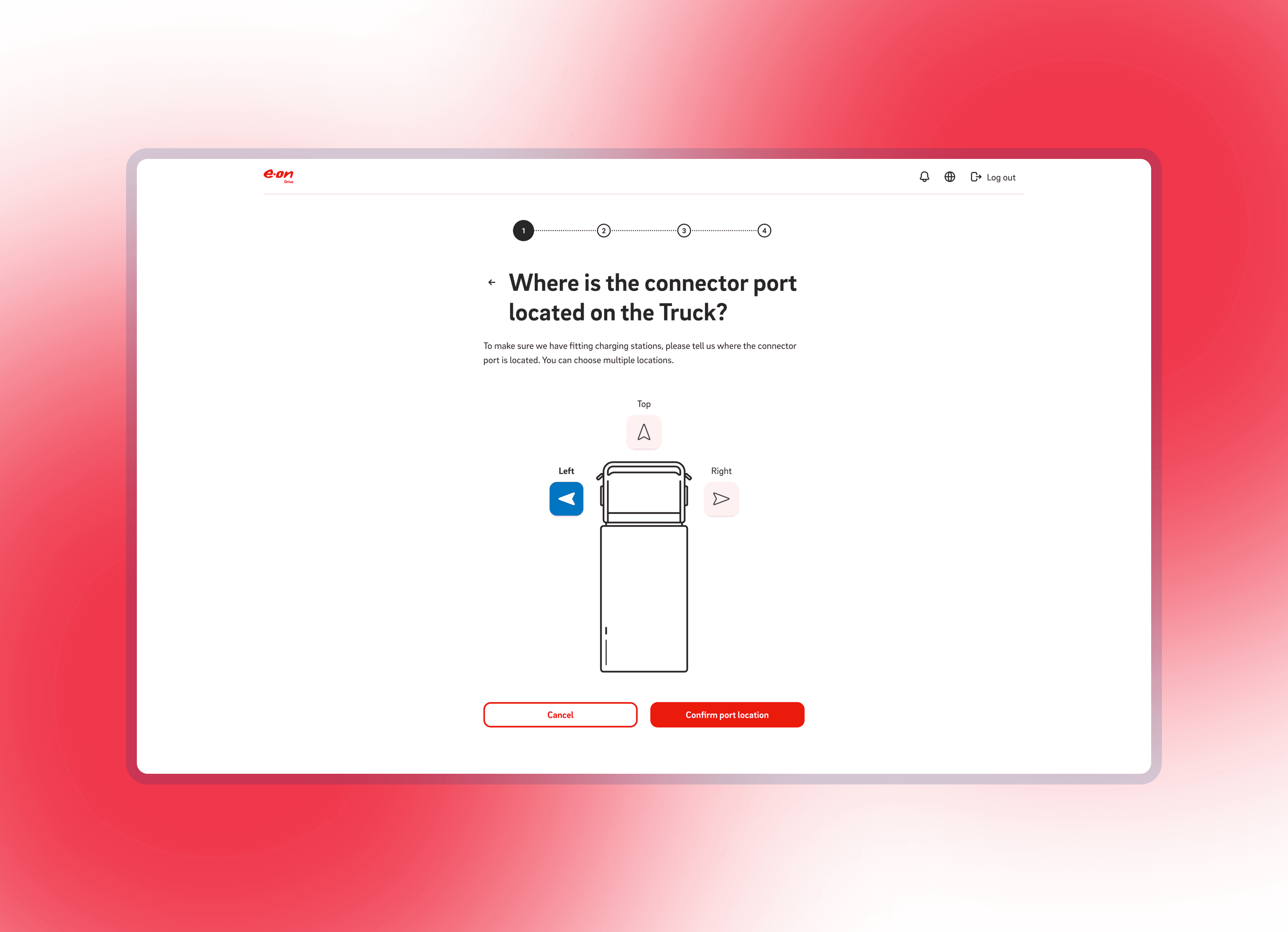
I worked on Truck Reservation, a user-centered e-mobility platform that allows dispatchers to pre-book charging stations for truck drivers, ensuring charging aligns with mandatory breaks. By removing uncertainty, wait times, and charger congestion, the solution improves route planning, operational efficiency, and reliability across the E.ON charging ecosystem.
Role
Senior Product
Designer
Team
1x Project Manager
2x Product Owners
2x Senior Product Designers
4x Engeneers
Impact
Enabled greener, low-emission logistics by supporting electric truck adoption
Strengthened electric charging infrastructure through smart reservation flows
Saved time and operational costs by reducing driving, waiting, and planning inefficiencies
Improved real-time coordination between drivers and dispatchers via intelligent communication
Problem area
When charging uncertainty disrupts electric truck operations
Electric truck operations depend on precise planning, clear coordination, and reliable access to charging infrastructure. However, drivers and dispatchers previously lacked a unified way to reserve charging stations in advance, creating uncertainty during routes and mandatory breaks.
Instead of supporting efficient planning, fragmented tools and manual coordination increased cognitive load, led to waiting times at chargers, inefficient rerouting, and unnecessary stress for both drivers and dispatchers, directly impacting operational efficiency and trust in electric mobility.
Problem 1
Managing multiple charging needs across routes required manual coordination, making it difficult to plan, track, and adjust reservations.
Problem 2
Drivers lacked clear, real-time visibility into their assigned reservations, leading to waiting, repositioning, or missed charging opportunities.
Problem 3
Without a structured reservation system, charging stations were underutilized or congested, reducing reliability and increasing downtime.
Design goals
What I aimed to achieve
Reduce driver wait time
Minimize time spent queuing at charging stations through guaranteed reservations.
Improve route planning
Enable faster, more predictable route planning for both roles: dispatchers and drivers.
Increase utilization
Maximize usage of charging infrastructure through smart allocation and scheduling.
Design decision 1
Designing a complete reservation flow that removes uncertainty
Early discovery sessions showed that both dispatchers and drivers struggled with fragmented charging workflows. Reservations required jumping between tools, guessing charger availability, and manually coordinating details like timing, location, and vehicle constraints. This led to wasted time, missed slots, and low trust in the charging infrastructure.
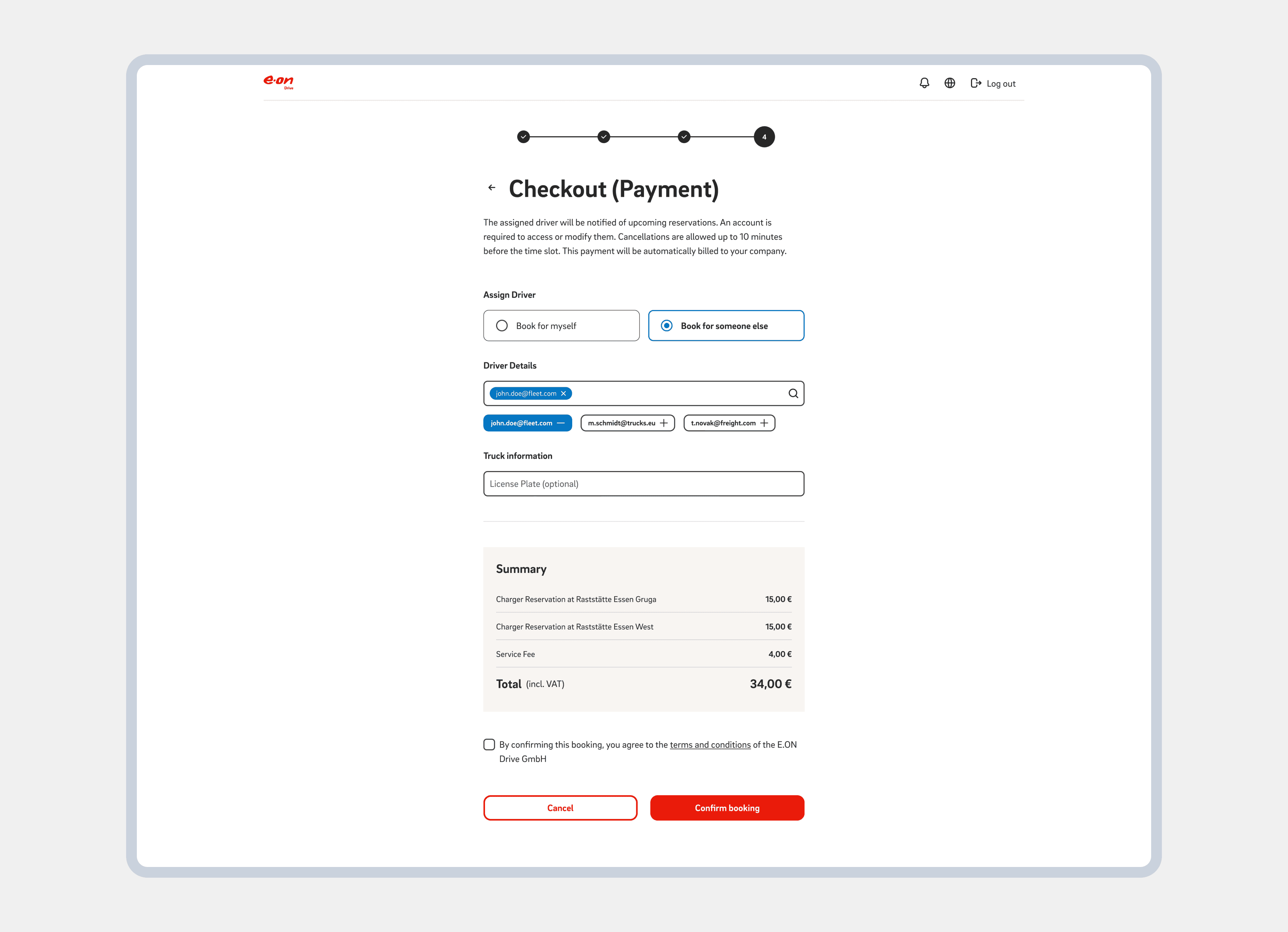
Instead of optimizing isolated screens, I designed the entire end-to-end reservation flow as a single, cohesive experience, from defining truck constraints to route planning, slot selection, and confirmation. The goal was to replace guesswork with clarity and make every step predictable, fast, and aligned with real logistics workflows.
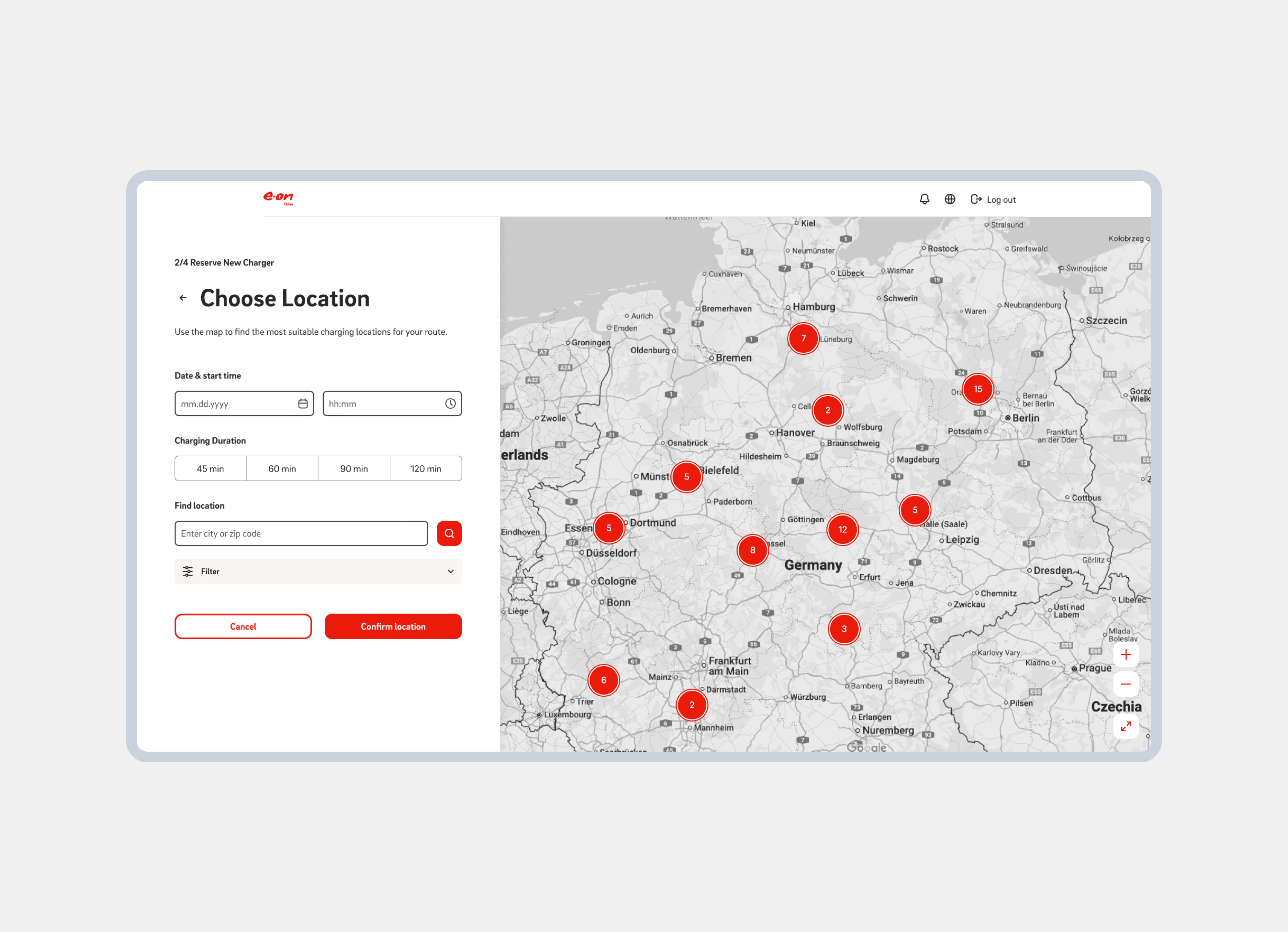
Key steps included in the flow
Truck setup & constraints
Capture truck details to ensure compatible and efficient charger allocation.
Smart selection
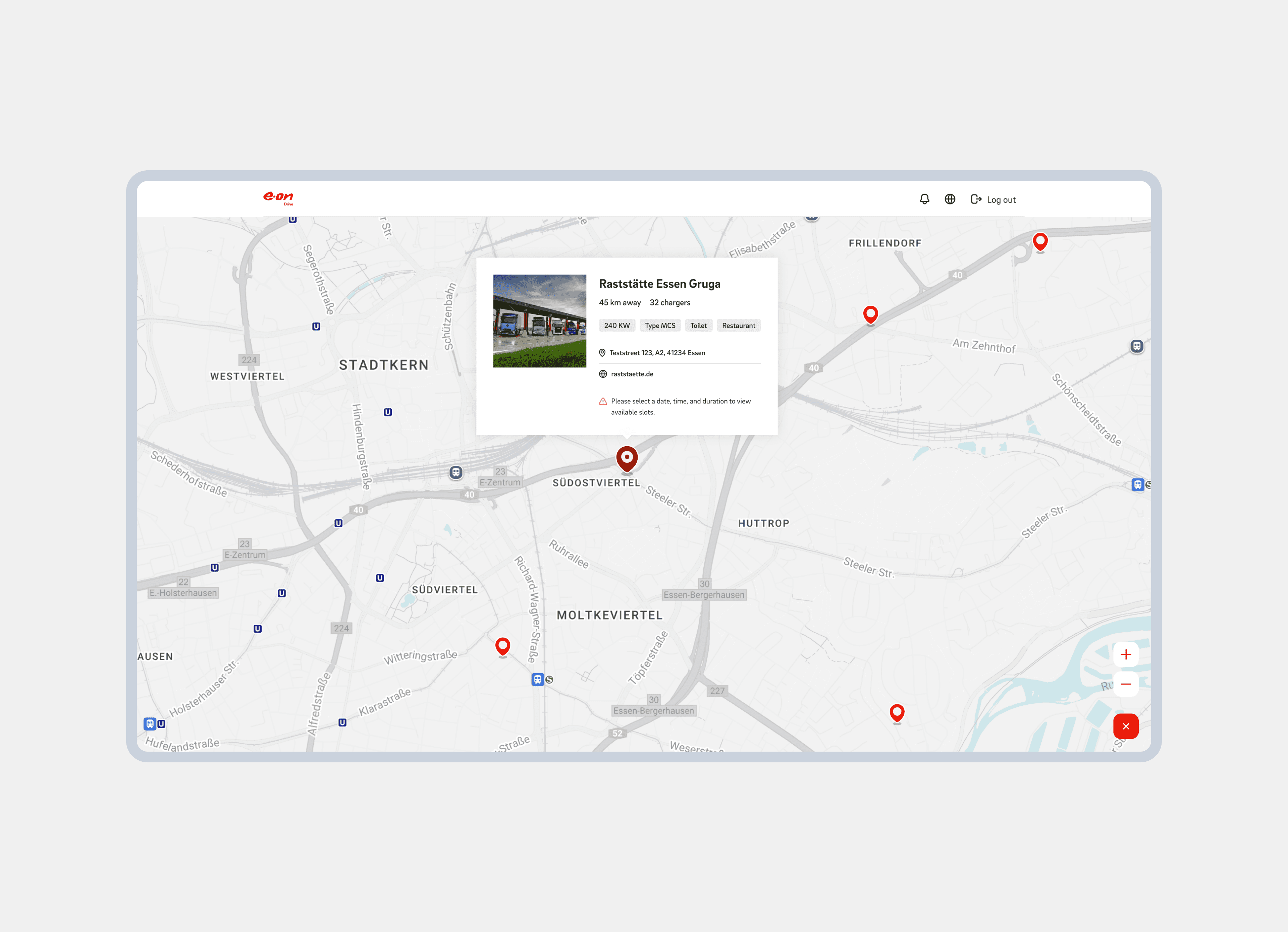
Select charging locations and time slots based on real availability and planned route constraints.
Route overview & validation
Review all planned charging stops in one view and make quick adjustments before confirming.
Assignment & checkout
Assign drivers, confirm reservation details, and complete checkout with clear ownership and pricing.
Design decision 2
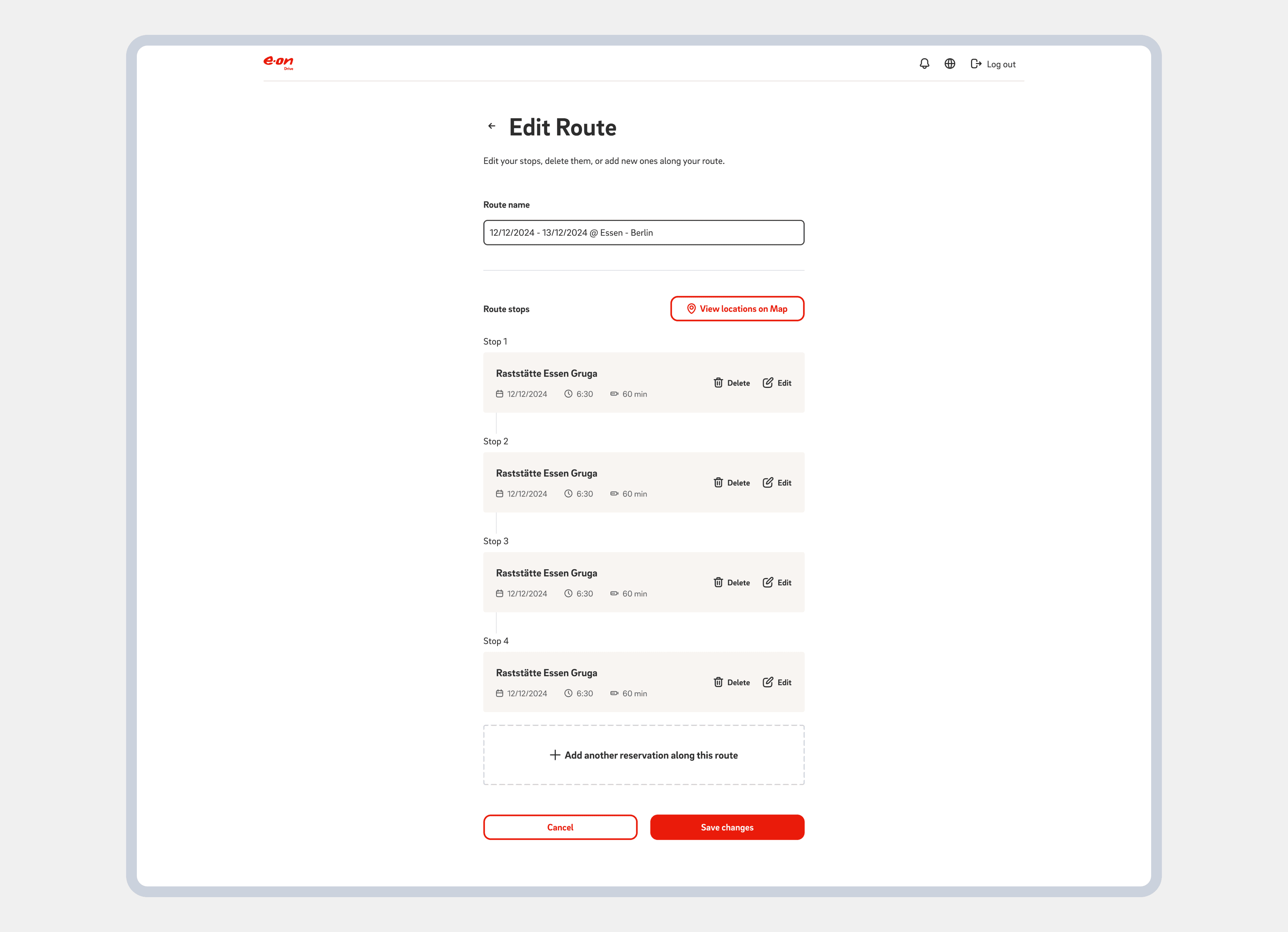
Editing multi-stop routes without breaking context
Managing reservations with multiple charging stops quickly became complex when users needed to make changes. Editing individual slots in isolation risked losing the bigger picture of the route, while deleting or reassigning reservations could introduce costly mistakes.
Instead of forcing users through fragmented edits, I designed a route-centric editing experience that keeps the entire journey visible at all times. Dispatchers can modify, add, or remove charging slots directly within the route overview, with clear confirmations and safeguards for destructive actions. This preserves context, reduces errors, and makes managing complex routes faster and more predictable, especially when changes need to happen under time pressure.
Outcome 1
Outcome 2
Safe confirmations prevent accidental deletions
Outcome 3
Updates without rebuilding the entire reservation
Design decision 3
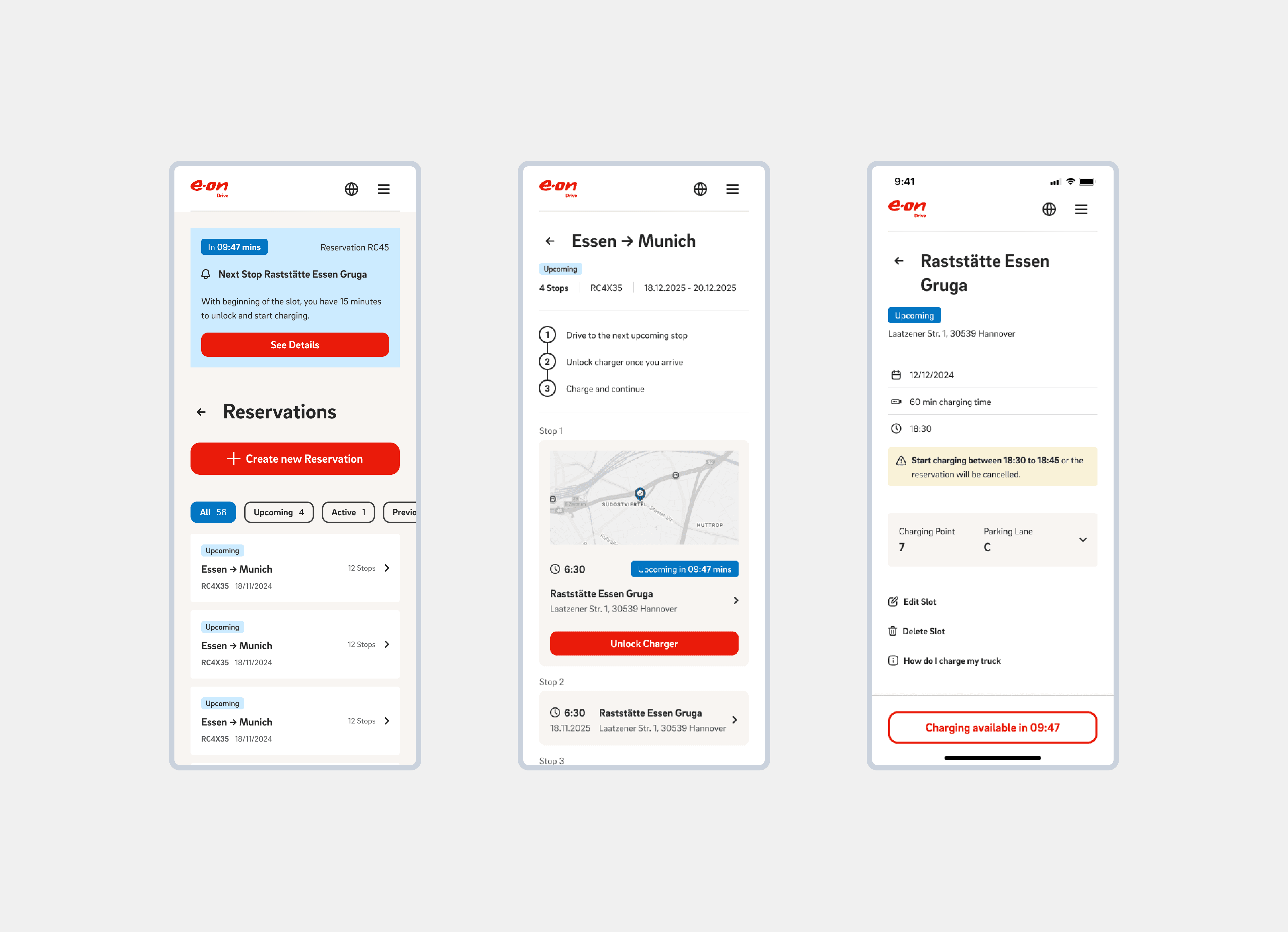
Making charger access instant and unambiguous for drivers
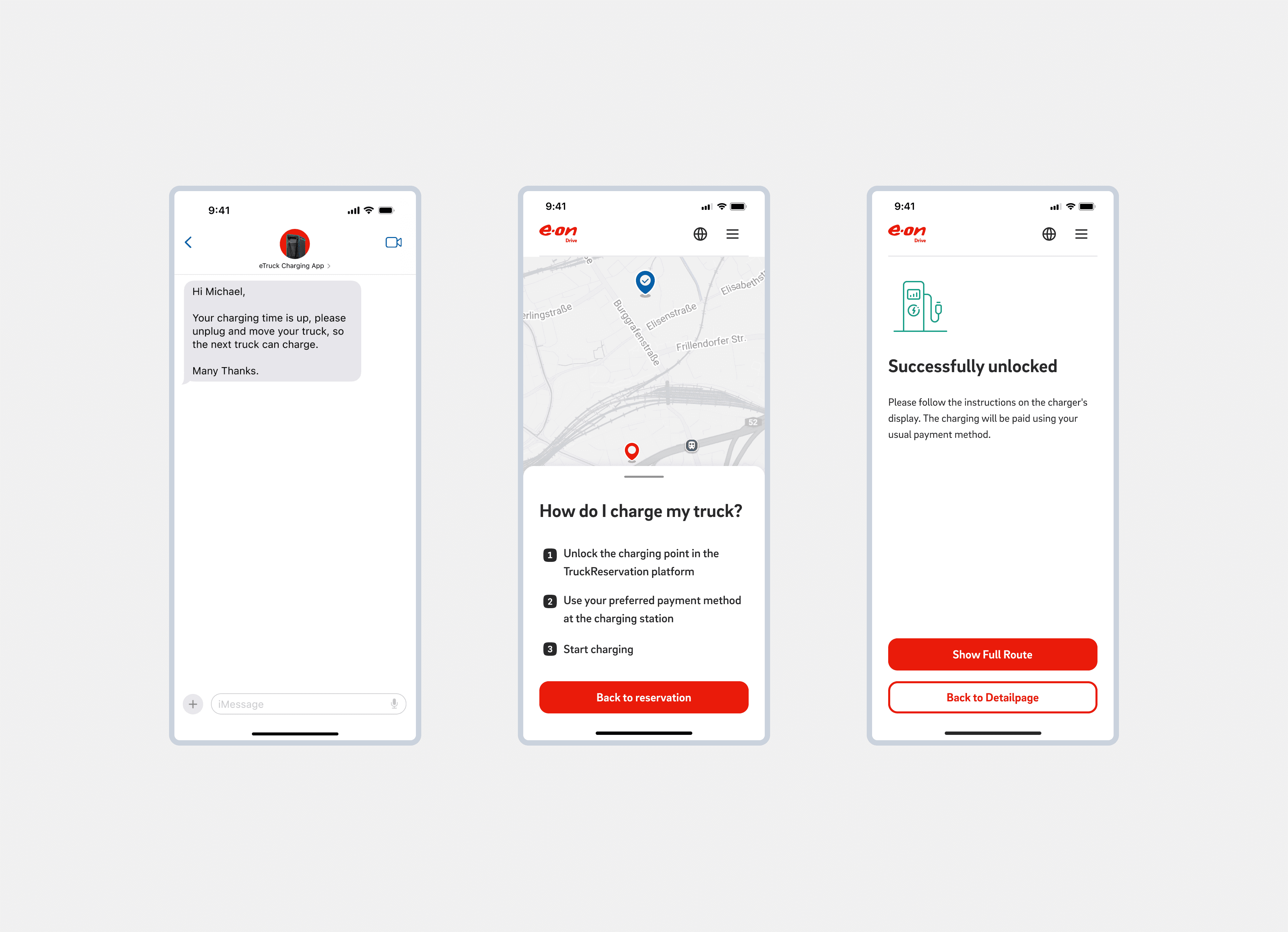
For drivers on the road, unlocking a charger is a time-critical moment. Any uncertainty about timing, eligibility, or next steps, can cause delays, missed reservations, or frustration during already tight schedules.
I designed a mobile-first flow that clearly guides drivers through each step of the process: approaching the stop, waiting for availability, unlocking the charger, and confirming success. Status-based messaging, countdown indicators, and a single primary action ensure drivers always know when they can act and what to do next. Once unlocked, clear confirmation and route navigation options help drivers quickly continue their journey without confusion.
Outcome 1
Clear readiness states reduce uncertainty before arrival
Outcome 2
One-tap unlock minimizes friction at the charging point
Outcome 3
Immediate confirmation reinforces trust and flow continuity
Retrospective
Making truck charging predictable and driver-friendly
The Truck Reservation project simplified a previously uncertain charging process into a reliable, end-to-end experience for dispatchers and drivers. By focusing on real logistics constraints, tight schedules, mandatory breaks, and limited charger availability, the system enables confident route planning and execution.
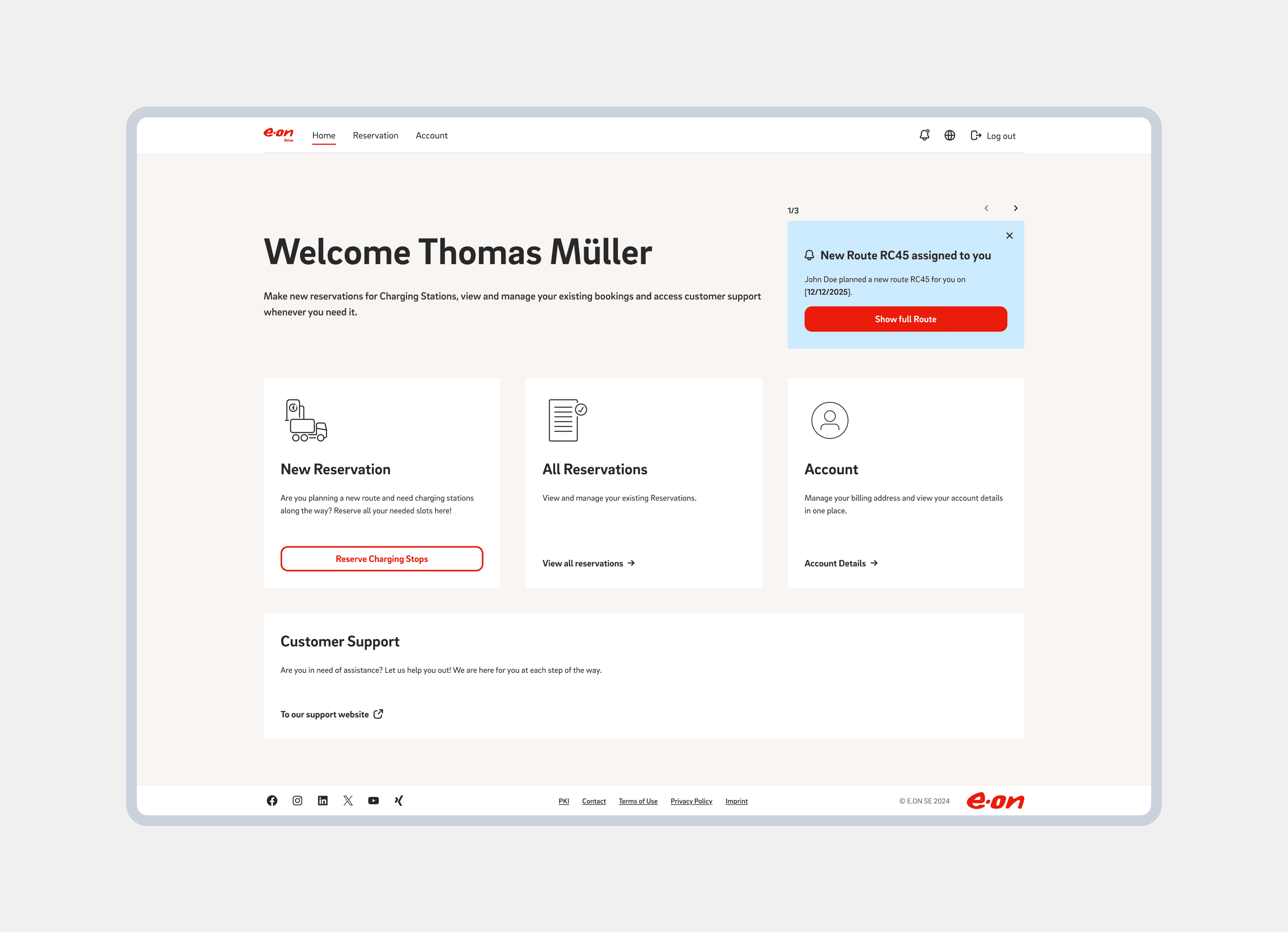
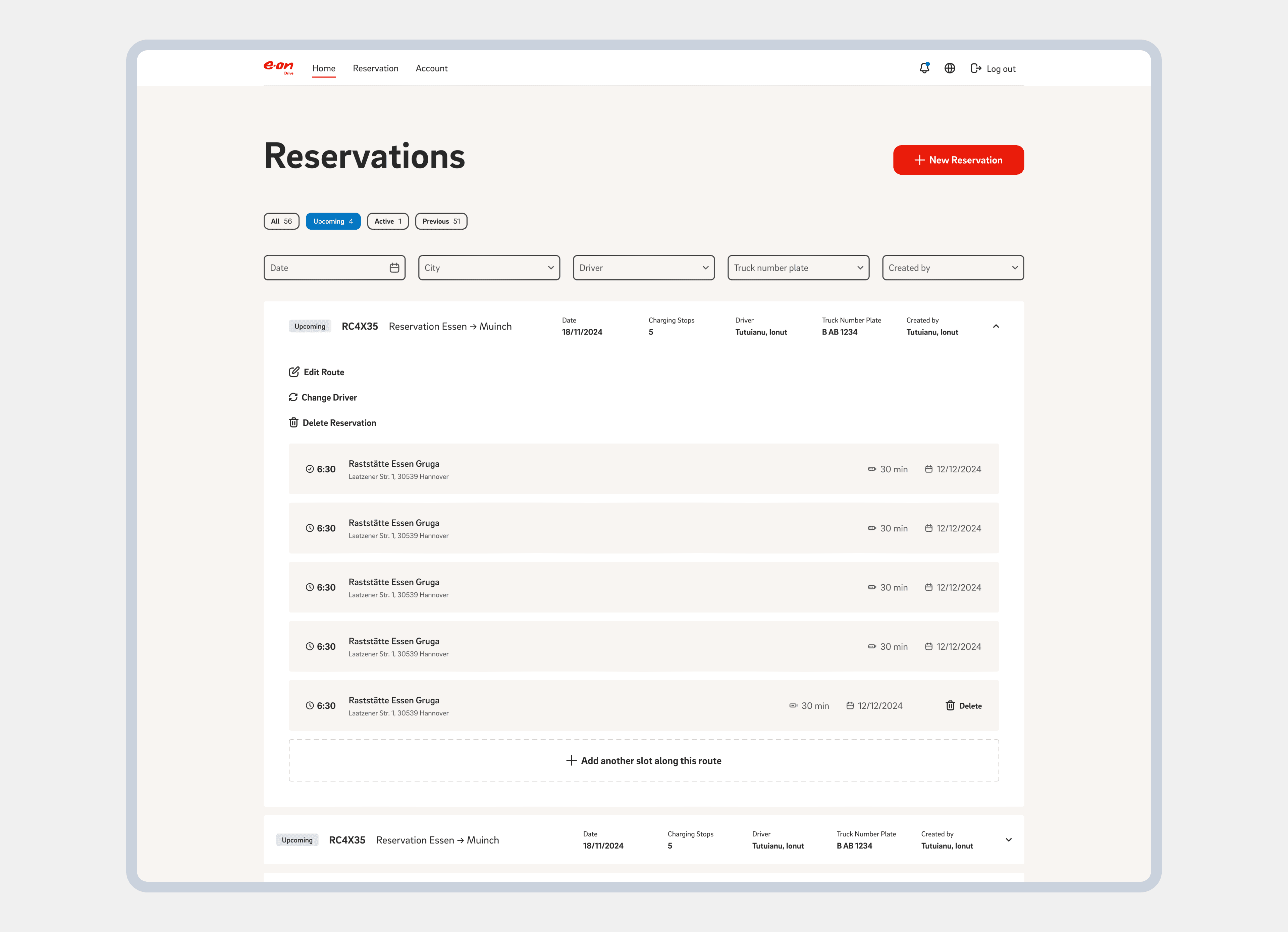
Drivers gained greater flexibility by managing reservations across multiple companies and creating bookings for themselves when needed. A proactive notification architecture ensures drivers are reminded of upcoming reservations and readiness windows, reducing missed slots and last-minute delays. Together, these improvements established a scalable, driver-first solution that increases trust in e-mobility operations.
Impact
Timely notifications and clear readiness states helped drivers arrive prepared and unlock chargers without delays.
Greater operational flexibility for drivers
Support for multi-company drivers and self-managed reservations increased autonomy while reducing dispatcher overhead.
Improved utilization of charging infrastructure
Predictable reservations and fewer no-shows led to more efficient use of charging stations and better route planning.